Authors : Hajer Ali Abdulla Alhmoudi , Shaher Bano Mirza , Fouad Lamghari Ridouane, Fujairah Research Centre, Sakamkam Road, Fujairah, United Arab Emirates
This study, conducted by Hajer Ali Abdulla Alhmoudi, Shaher Bano Mirza, and Dr. Fouad Lamghari Ridouane at the Fujairah Research Centre, investigates the nutritional and mineral composition of Ziziphus spina-christi—locally known as Sidr—native to Fujairah, UAE. The research compares Sidr’s nutraceutical value with the same species from Nigeria and with common leafy vegetables (spinach and lettuce), using international AOAC analytical standards. The findings highlight Ziziphus spina-christi as a strategic desert plant with exceptional nutritional density and strong potential for food security in arid regions.
Background
UAE’s extreme desert conditions—high heat, salinity, and water scarcity—create a natural laboratory for developing resilient, nutrient-rich native plants. The Sidr tree thrives under these harsh environments, demonstrating remarkable adaptability while serving multiple ecological and economic purposes. Traditionally, Sidr is valued for its medicinal properties and as a primary nectar source for high-quality honey. Its resilience and nutritional richness make it a promising candidate for sustainable agriculture and desert greening initiatives.
Methods
Leaves of Ziziphus spina-christi were collected from Al Taibah Farm in Fujairah and analyzed for proximate composition and mineral content. Parameters included dry matter, crude protein, fat, fiber, ash, total sugars, and macro-minerals (Ca, P, Na, K, Mg, Zn, Cu, Mn, Se).
Results
The Fujairah-origin Sidr displayed:
Dry matter: 75.92%
Crude protein: 6.08%
Crude fiber: 16.82%
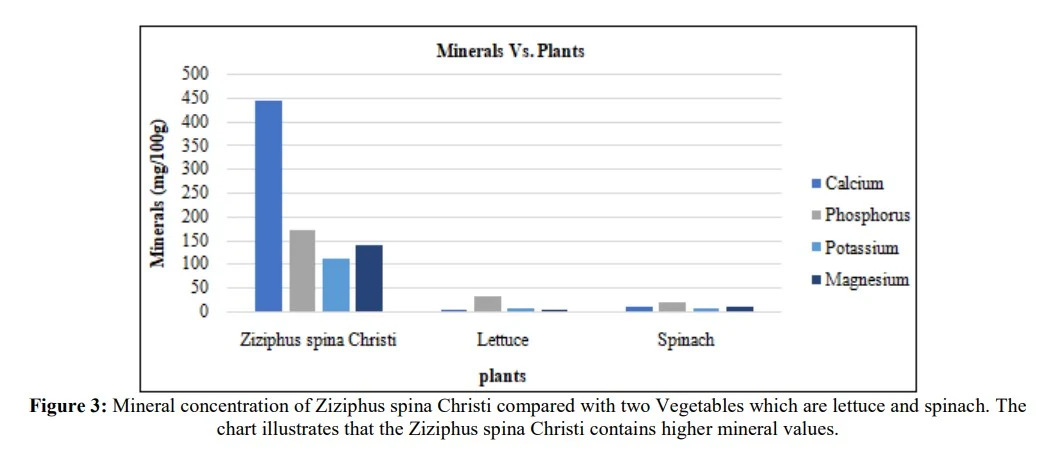
Calcium: 444.26 mg/100g
Phosphorus: 171.49 mg/100g
Magnesium: 139.29 mg/100g
These levels were substantially higher than those found in spinach (Ca 8.80 mg/100g) and lettuce (Ca 3.38 mg/100g), confirming Sidr’s superiority as a nutrient-dense plant. Compared to Nigerian samples, the Fujairah Sidr showed even higher mineral content, emphasizing the influence of UAE’s soil and climate on enhancing nutritional properties.
Conclusion and Food Security Relevance
The study establishes Ziziphus spina-christi as a nutraceutical powerhouse and a key resource for desert food systems. Its high calcium, phosphorus, potassium, and magnesium levels make it ideal for human nutrition, livestock feed, and natural supplements. Beyond health benefits, Sidr’s drought tolerance and minimal water requirement make it vital for food security strategies in arid and semi-arid regions, supporting both climate resilience and agro-economic sustainability.
As the UAE and wider Gulf region push toward self-sufficiency and ecosystem restoration, Ziziphus spina-christi stands out as a model species for sustainable cultivation, land rehabilitation, and nutrition security—bridging traditional Emirati heritage with future-focused desert agriculture.