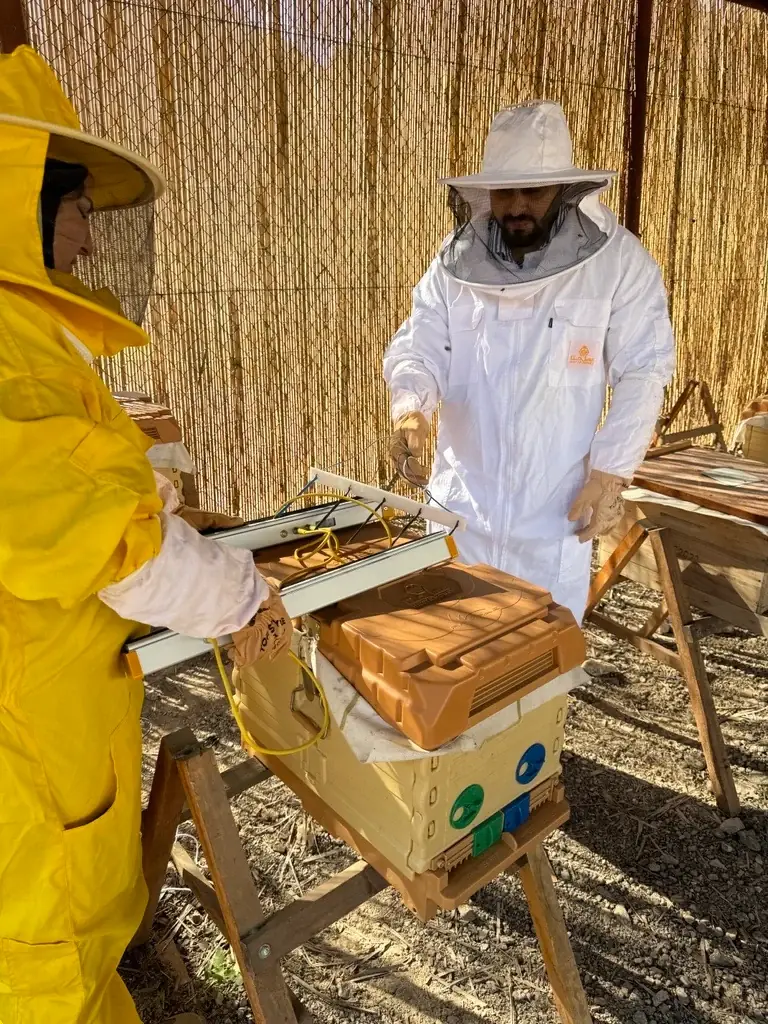
In a breakthrough for food security and scientific independence, the Fujairah Research Centre (FRC) has announced that it is the first and only laboratory in the UAE capable of performing advanced pollen profiling for honey. This leap blends rigorous science with practical applications, fundamentally transforming how consumers, beekeepers, retailers, and regulators can verify the integrity and origin of honey products.
Hailed as a pivotal achievement in national research capabilities, this initiative sets a new standard for excellence in food science and environmental monitoring across the UAE.
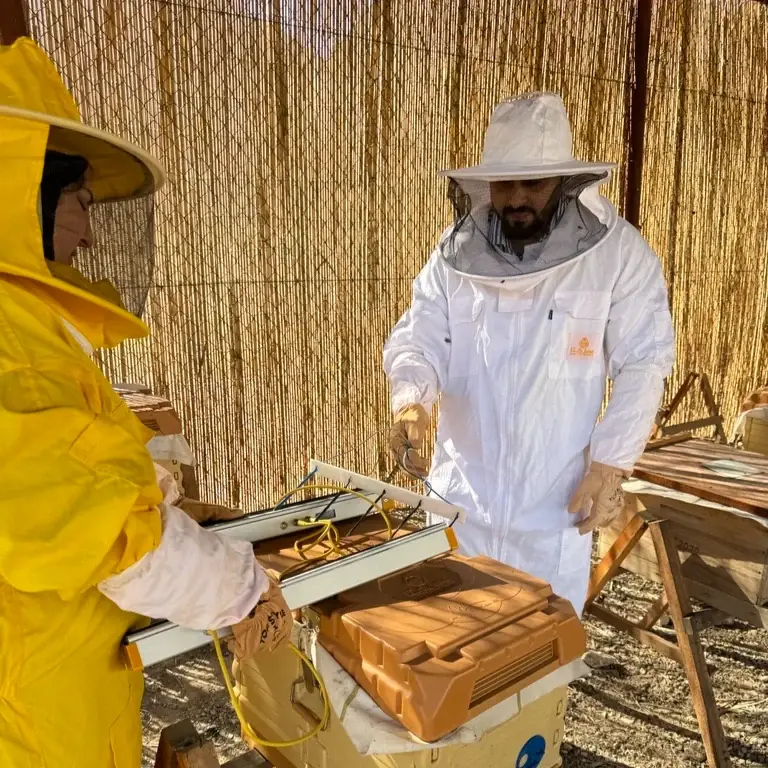
The Imperative of Origin: Why Pollen Profiling Matters.
Honey is a remarkable natural product, carrying the distinct biological fingerprint of its floral sources and geographic origin. However, as global demand for natural honey grows, so does the risk of adulteration or mislabeling. Common deceptive practices include substituting honey from different floral sources, mixing floral varieties, or diluting premium honey with cheaper syrups.
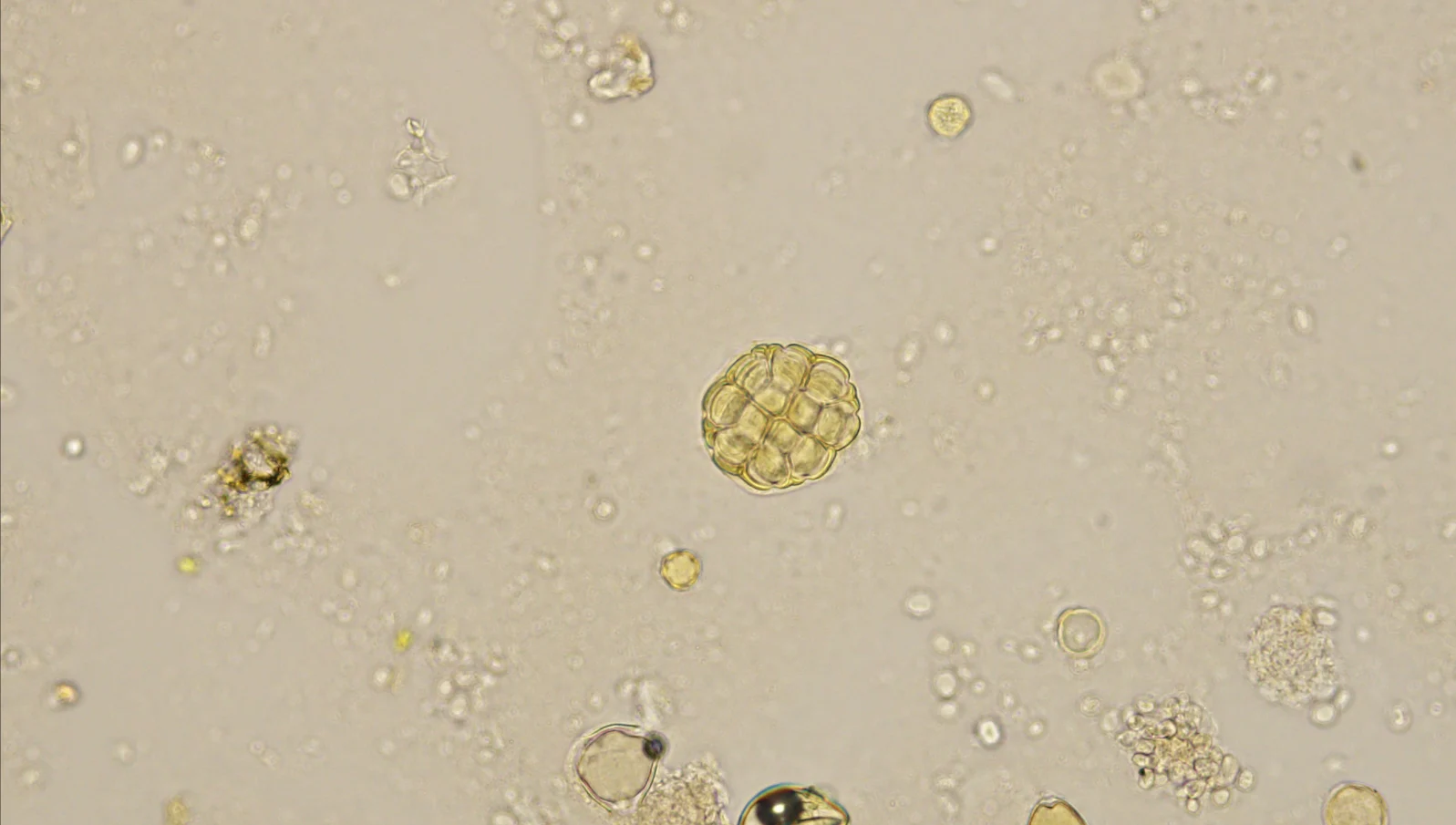
Pollen, the microscopic granules passively carried from flowers into the nectar and subsequently the honey, serves as a unique botanical signature. An accurate analysis of this pollen profile confirms the nectar sources and geographic origin, acting as a powerful and necessary check against commercial fraud and poor quality control.
Advanced Profiling: FRC’s Multi-Layered Approach.
Traditional methods of pollen analysis (microscopic palynology) have long been the industry standard for determining floral origin. However, these methods are often limited by the need for specialized taxonomic expertise, their time-consuming nature, and inconclusive results, especially when dealing with processed honey where pollen counts may be sparse or degraded.
The FRC’s innovative approach modernizes this field by integrating multiple cutting-edge scientific techniques, a methodology also highlighted in their recently published research on honey authentication:
High-Throughput DNA Barcoding and Metabarcoding: This core method reads the DNA from pollen grains embedded in the honey, matching sequences to comprehensive genetic reference databases. This can rapidly identify dozens or hundreds of plant taxa present in a sample, even at low concentrations.
Quantitative Insights via Bioinformatics: Sophisticated algorithms and bioinformatics tools are utilized to clean and analyze the sequence data, providing not just a list of species but also estimating their relative abundance. This allows researchers to distinguish between typical nectar sources and potential dilution products or contaminants.
Integrated AI and Pattern Recognition: Leveraging artificial intelligence, large datasets of authentic honey profiles are used to train machine learning models. These models are adept at recognizing legitimate pollen signatures for specific regions and floral blends, instantly flagging potential inconsistencies or anomalies in a new sample.
Microbiology and Molecular Biology: This process leverages the center's advanced capabilities in microbiology and molecular biology, ensuring precise and reliable testing.
The Significance of a National Achievement
This achievement marks a new era in the UAE's national research capabilities and scientific independence for the UAE.
Setting the Standard: By establishing this specialized laboratory, the FRC is creating a centralized national standard for pollen-based honey authentication, ensuring that quality assessment is consistent and reliable across the country.
Protecting Consumers and Producers: The ability to create reliable pollen fingerprints tied to botanical sources and terroir significantly boosts anti-fraud enforcement and consumer protection, while providing local beekeepers a verifiable mark of quality for their premium products.
Team Recognition: FRC extends its profound gratitude to the specialists, including Khawla, Youssouf, Mouncif, Namsheed, Simon, and the entire Food Lab and Manahel teams, whose incredible dedication and expertise made this milestone possible.
The Path Forward:
This new capability is a statement of progress, resilience, and local innovation. The FRC is committed to constantly improving and innovating. The next steps involve using this specialized expertise to reinforce the center's role in sustainable beekeeping and biodiversity protection for arid and semi-arid ecosystems.
By translating microscopic plant signatures into verifiable stories of origin, the Fujairah Research Centre is leading a new era of honey authentication—one that promises integrity, clarity, and confidence from hive to household.
Frequently Asked Questions
What is FRC's biggest achievement in honey authentication?
The Fujairah Research Centre (FRC) is the first and only laboratory in the UAE capable of performing advanced pollen profiling for honey, establishing a new national standard for food science.
How does FRC use pollen profiling to check honey quality?
FRC analyzes DNA from pollen in honey using advanced techniques like DNA barcoding and artificial intelligence to confirm the genuine floral source and geographical origin, helping to combat fraud and mislabeling.
Why is FRC's new testing capability important for the UAE?
It ensures food integrity and scientific independence by providing a reliable, local method to certify the quality of honey, protecting both consumers and local beekeepers.