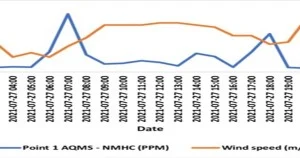
Urban air quality is a growing concern due to pollutants like non-methane hydrocarbons (NMHCs), which contribute to smog, respiratory problems, and environmental damage. These compounds, commonly released from vehicles and industrial activities, play a role in forming ground-level ozone and aerosols. Monitoring and understanding their behavior is essential for healthier cities.
Electronic nose (eNose) technology is an innovative solution for detecting NMHCs. These sensors mimic the human sense of smell, using chemical gas arrays combined with software to identify and measure pollutants in real time. Unlike traditional methods, eNose sensors provide detailed, continuous data and can help trace pollutants back to their sources.
In urban monitoring, sensors are placed in areas with high emissions, such as industrial zones, busy roads, and densely populated districts. By combining sensor data with wind speed and direction, researchers can model how pollutants disperse and identify conditions that lead to higher concentrations.
Studies have shown that NMHC levels are influenced by wind: low wind speeds can cause pollutants to accumulate in traffic-heavy areas, while stronger winds disperse them across the city. For example, higher concentrations are often detected when winds come from specific directions, revealing the locations of major emission sources.
By providing detailed, real-time insights, eNose technology helps city planners and environmental agencies develop targeted strategies for reducing air pollution. This approach improves urban health, informs sustainable policies, and ensures better living conditions for residents.
Innovative monitoring tools like eNose sensors, combined with meteorological data, represent the future of urban air quality management, offering a smarter, more responsive way to protect our environment and public health. Reference
Fujairah Research Centre