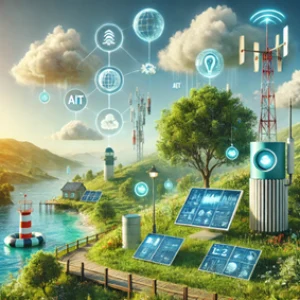
Environmental conservation is more important than ever, and technology is playing a key role in protecting natural ecosystems. The combination of the Internet of Things (IoT) and Artificial Intelligence (AI) allows us to monitor, analyze, and respond to environmental changes more quickly and accurately than ever before.
Modern environmental monitoring uses networks of sensors to collect data from air, water, and land ecosystems. For example, smart weather stations track temperature, humidity, wind, air quality, and gas levels, providing real-time insights for climate and pollution management. In marine environments, sensor-equipped buoys measure water temperature, pH, salinity, and pollution, helping detect issues such as harmful algal blooms or oil spills before they escalate.
In desert regions, tracking livestock and wildlife with IoT systems is another powerful application. Sensors can monitor movement, health, and behavior, even in harsh conditions, improving care while preserving traditional practices and supporting sustainable resource use.
Implementing these technologies comes with challenges. Equipment must withstand extreme temperatures, high humidity, and corrosive environments. Remote systems require efficient power management, often using solar energy or batteries, and reliable communication over long distances is critical for accurate and continuous data collection.
The benefits of environmental monitoring are substantial. Real-time data allows for informed decisions to improve air and water quality, protect biodiversity, and manage natural resources effectively. Predictive analytics can forecast environmental changes, enabling preventive actions against extreme weather, ecological disruptions, and pollution events. Emerging technologies, such as blockchain, offer secure, verifiable records of environmental data, increasing trust and transparency.
By combining IoT, AI, and advanced analytics, environmental monitoring provides essential tools for sustainability. Real-time observation, accurate analysis, and proactive management help communities and decision-makers protect ecosystems, support public health, and ensure a greener future. Reference
Fujairah Research Centre