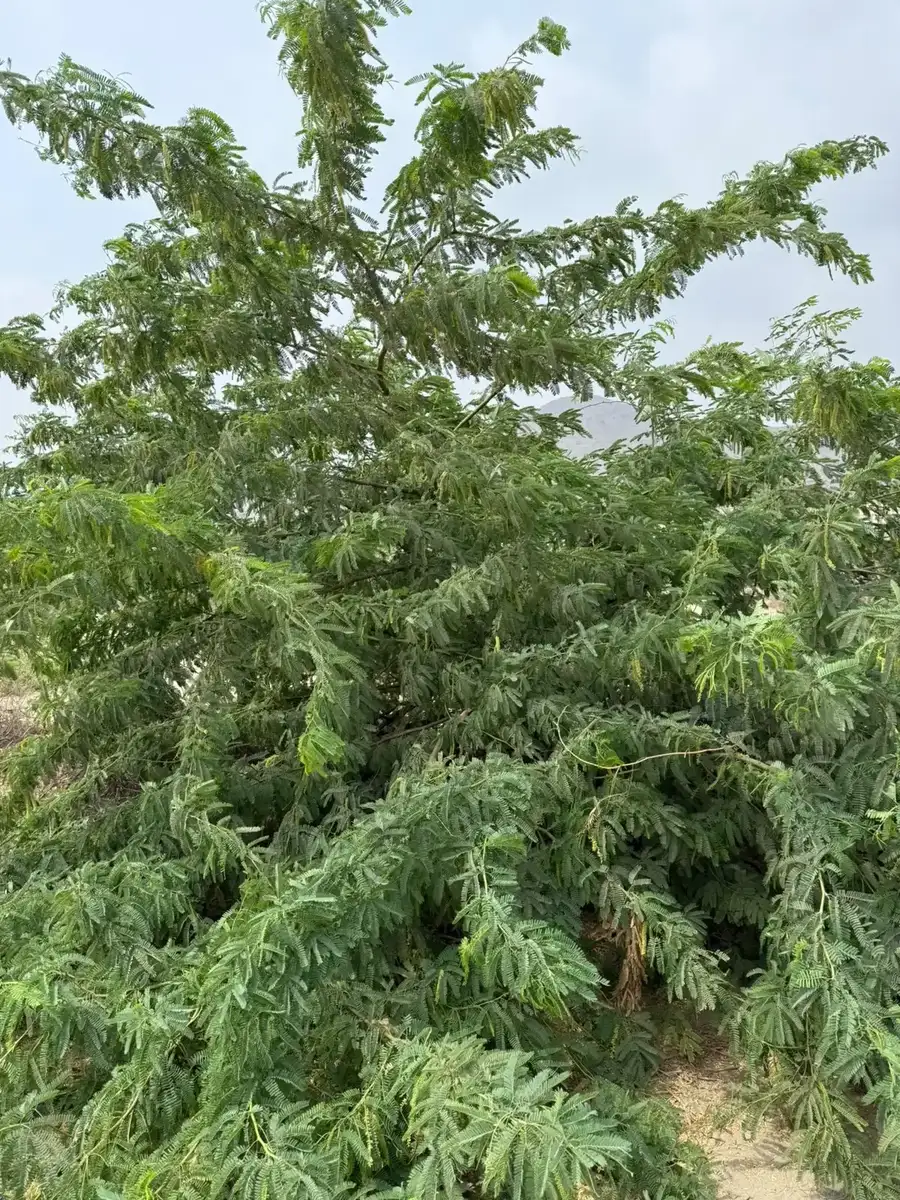
Prosopis juliflora commonly known as mesquite is native to Central and South America. It is a drought resistant plant with a high ability to challenge various climatic conditions. Therefore, this plant species was introduced to semi-arid and arid regions for environmental restoration and soil conservation.
However, plants of mesquite have escaped experimental sites and invaded many pastoral lands, causing significant socioeconomic problems. To date, invasiveness of mesquite plants has contributed to a net increase of environmental degradation, water table depletion, and global warming. Furthermore, invasiveness of mesquite plant has been associated with animal and human health alteration.
Prosopis juliflora plant can establish under very poor soil quality, and it can grow into unreachable habitats, which contributes to increasing its survival capacity over the other plants species. High growth rate, tetraploid, and allelopathy are more likely the main key factors enhancing its invasiveness ability in the introduced range. As one of the most recalcitrant invasive plant species, its expansion has been monitored for several years, and the current findings revealed that, infested areas have been increased. More importantly, projection analyses on its expansion have showed that total land coverage will increase substantially in the coming years. With the main goal to find mitigating methods to control the invasiveness of mesquite plants, thousands of scientific papers have been but however, none of the suggested methods has shown strong effectiveness against its proliferation.
Therefore, for sustainable approach, Researchers at the Fujairah Research Centre set out to see how allelochemical derived from sweet potatoes could be used as natural herbicide, and alternative way to mitigate the nuisance and the expansion of the mesquite plants. To fully understand how these allelochemicals could affect the performance of mesquite plants, the current investigations were performed on the seed germination, seedlings growth attributes and biochemical analyses, and stress assessments.
The experimental work ended with very interesting findings: Sweet potato shoot extracts showed strong effectiveness to control the nuisances associated… caused electrolyte leakage in Prosopis juliflora seedlings. In simple terms, the sweet potato effectively disrupted the cell membranes of the invasive weed, significantly stunting its germination and early growth. When comparing the two plants, the differences are plenty. Prosopis juliflora is an invasive weed ranked among the top 100 worldwide that destroys local biodiversity and has a devastatingly high-water impact, rapidly depletes groundwater tables, and offers minimal nutritional value. On the flip side, the sweet potato is an eco-friendly food crop that acts as an excellent soil-stabilizing ground cover, utilizes localized irrigation efficiently while surviving drought stress, and offers exceptional human nutrition rich in Vitamins A & C, zinc, protein, and complex carbohydrates.
The biggest issue with Mesquite right now is that animals eat its sweet pods, and as they move through Fujairah’s mountains and valleys, they propagate their seeds everywhere. By introducing sweet potatoes into managed farming zones, local farmers get a brilliant double-win. They get a highly profitable, climate-resilient superfood to sell, and a biological barrier that keeps the weed from encroaching on their land. At the end of the day, desert farming in the UAE is evolving. It’s no longer just about producing food; it’s about restoring ecological balance. By tapping into the natural defenses of the sweet potato, Fujairah can lead the way in protecting our landscape while securing our food supply