The Fujairah Research Centre (FRC) is dedicated to science and innovation, but its mission—"Innovating to preserve the future"—extends beyond the laboratory bench and into active community stewardship. This commitment was recently demonstrated through FRC’s enthusiastic participation in the “Recycle, Reforest, Refine” initiative, an essential program organized by the Fujairah Environment Authority (FEA).
This initiative is more than a simple clean-up campaign; it is a vital, collaborative effort aimed at embedding principles of sustainability and conservation deeply within Fujairah’s institutional framework. By bringing together various public and private institutions, the program reinforces the idea that environmental responsibility is a collective endeavor.
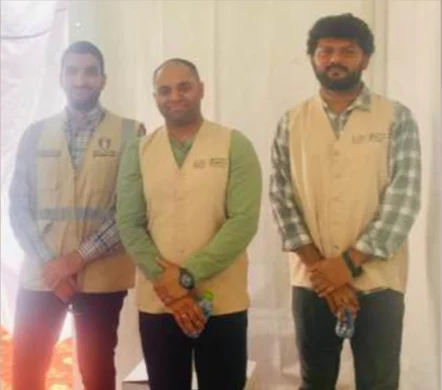
The Three Pillars of FRC Environmental Stewardship.
The “Recycle, Reforest, Refine” title neatly encapsulates the three core actions needed for a sustainable future:
1. Recycle: Closing the Loop on Waste.
For the FRC team, participation centered on responsible waste management. The staff actively took part in the collection and recycling of used paper, books, and files. In a research environment that generates significant documentation, paper recycling is a critical step.
By diverting these materials from landfills, the FRC not only reduces its ecological footprint but also saves valuable natural resources. Recycling a single ton of paper, for example, can conserve energy, save thousands of gallons of water, and prevent unnecessary deforestation. This small, daily act of environmental responsibility is essential to FRC’s ongoing commitment to a circular economy.
2. Reforest: Investing in Biodiversity.
While the FRC’s immediate contribution focused on recycling, the spirit of 'Reforest' aligns perfectly with its ongoing research into terrestrial biodiversity. FRC is already a leader in this area, publishing groundbreaking studies this quarter on the large-scale mapping and conservation of vital desert flora like the Ghaf and Acacia Tortilis trees using advanced technologies like Unmanned Aerial Vehicles (UAVs) and deep learning.
These reforestation and conservation efforts are crucial for the UAE, where native trees play a vital role in stabilizing soil, combating desertification, and providing habitats for local wildlife. The FRC’s research provides the scientific foundation, while the FEA's initiatives provide the operational pathway to bring these greening goals to fruition.
3. Refine: The Continuous Improvement Cycle
The third pillar, 'Refine,' represents the necessary cycle of continuous improvement in environmental practices. In the context of collaboration, the initiative serves to refine the partnership between institutions like FRC and FEA, fostering transparency and streamlining processes for mutual goals in sustainability and technological innovation.
This commitment to refinement is visible across FRC’s operations, from its marine research on the Jaywun expedition (which included water quality analysis to refine environmental baselines) to its sustainable apiary work, which aims to reinforce the role of beekeeping in arid and semi-arid ecosystems.
Collaboration as a Catalyst for Change.
The success of a program like “Recycle, Reforest, Refine” relies heavily on cross-institutional partnerships. The initiative is a prime example of how collaboration among government agencies and research bodies can accelerate conservation efforts.
By partnering with the FEA on this and other projects—such as the kick-off of the second Solar project at Honey Park, a major collaboration with the Technology Innovation Institute Abu Dhabi (TII) and FEA—FRC demonstrates its conviction that tackling complex environmental challenges requires a united front.
In Fujairah, environmental leadership is a shared responsibility. By participating in this program, the Fujairah Research Centre confirms its position as a key pillar in the region’s drive toward a sustainable future, transforming institutional waste into resources and translating commitment into tangible action.
Frequently Asked Questions
What is the specific goal of the 'Refine' pillar in the initiative?
The 'Refine' pillar aims to continuously improve environmental practices and streamline collaboration between institutions like FRC and the FEA to achieve shared sustainability goals.
How does FRC’s paper recycling relate to its broader conservation research?
The initiative supports FRC’s work to protect desert flora (like Ghaf trees) by promoting general resource conservation, which is crucial for fighting desertification and supporting biodiversity in arid regions.
What types of materials did the FRC team focus on recycling?
The FRC team specifically targeted institutional documentation, collecting and recycling used paper, books, and files to reduce the center's ecological footprint.