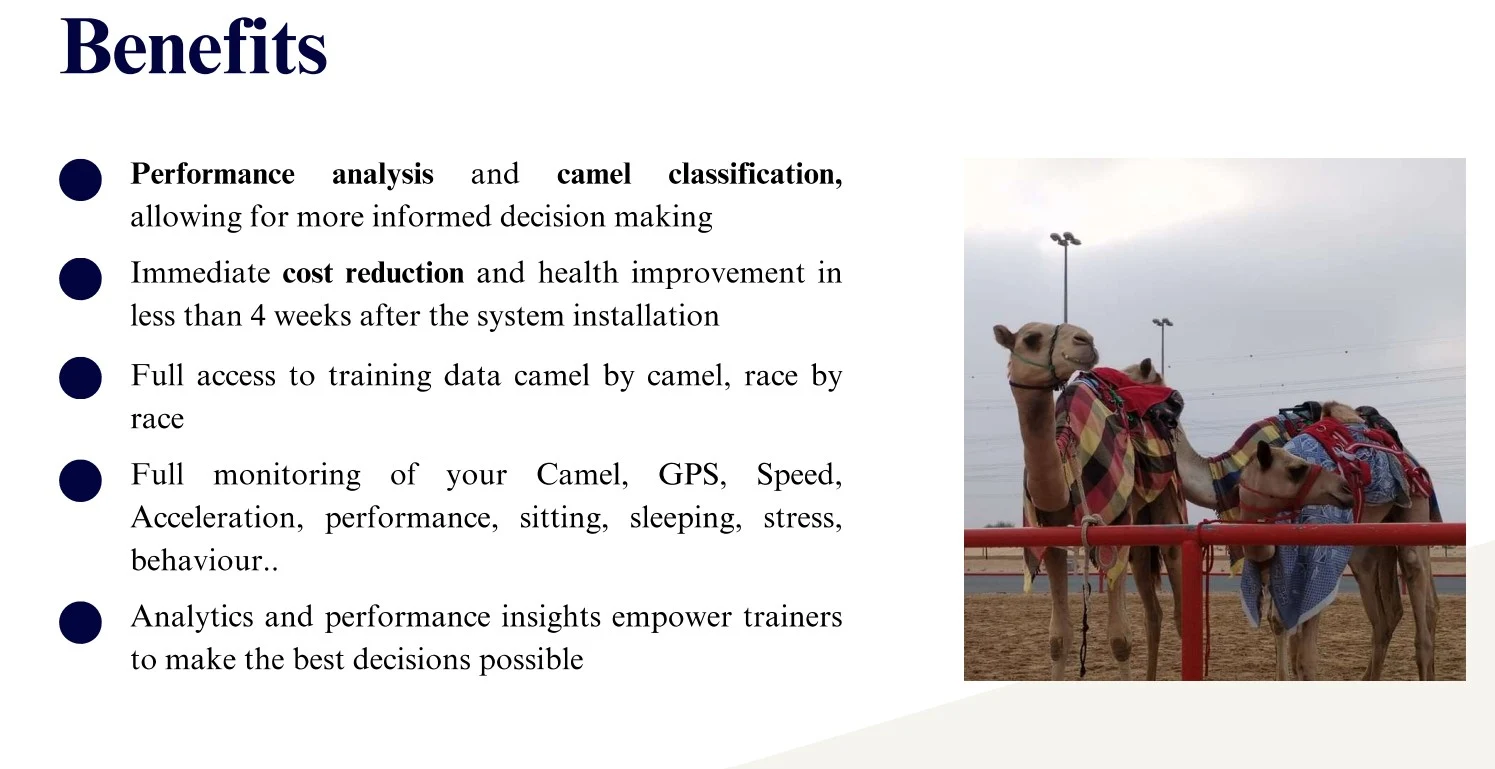
In traditional camel training, fatigue is one of the most underestimated dangers. Trainers often detect fatigue only when the camel visibly slows down, starts drifting away from its line, or shows obvious signs like labored breathing or a stiff gait. But by the time these signs appear, the camel has already accumulated internal stress that affects performance and increases the likelihood of injury.
Early fatigue develops quietly. Camels may maintain good speed while their stride coordination deteriorates. The timing between steps changes, the micro-movements in the joints become unstable, and muscular compensation begins on one side of the body. None of this is visible to the naked eye. Moreover, when a trainer oversees dozens of camels, even the best observer cannot catch these subtle transitions repeatedly and accurately.
IoT sensors eliminate this blind spot entirely.They analyze:
Minute changes in acceleration curves
Step-to-step rhythm stability
Joint loading patterns
Body tilt and micro-corrections
Heat signatures indicating internal effort
AI models learn each camel’s normal pattern and immediately detect deviations. Trainers receive alerts when fatigue starts developing — not when it's already harmful. This level of early diagnosis protects camels against overtraining, ensures longer athletic careers, and gives trainers absolute clarity on when to push and when to rest. Fatigue becomes manageable instead of unpredictable.