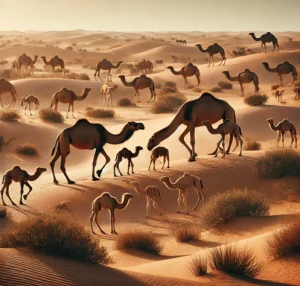
Camels have been a vital part of life in the Arabian Gulf for centuries, symbolizing resilience, adaptability, and cultural heritage. Known as the "Ships of the Desert," camels thrived in harsh desert conditions, helping people travel long distances, carry goods, and trade across the region.
Historically, camels provided milk, meat, and wool, which were essential for nourishment, clothing, and shelter. They played an important role in trade, connecting settlements and supporting the local economy.
Today, camels continue to be significant in Emirati culture. Camel milk remains a dietary staple, while their wool and leather contribute to traditional crafts. Cultural events like camel racing and beauty contests celebrate these animals, blending tradition with modern innovation. Camel racing has become a competitive industry with advanced breeding programs and robotic jockeys, ensuring animal welfare and high performance. Camel beauty contests reward owners for the best appearance and grooming, promoting the preservation of purebred camels.
Beyond competitions, camels are central to tourism, offering desert safaris and cultural experiences that connect visitors with traditional desert life. Camels represent both the history and ongoing cultural identity of the region, bridging the past and present.
Their resilience, versatility, and cultural significance make camels a lasting symbol of the Arabian Gulf’s heritage and traditions. Reference
Fujairah Research Centre