Achieving National Energy Goals through Strategic Partnerships
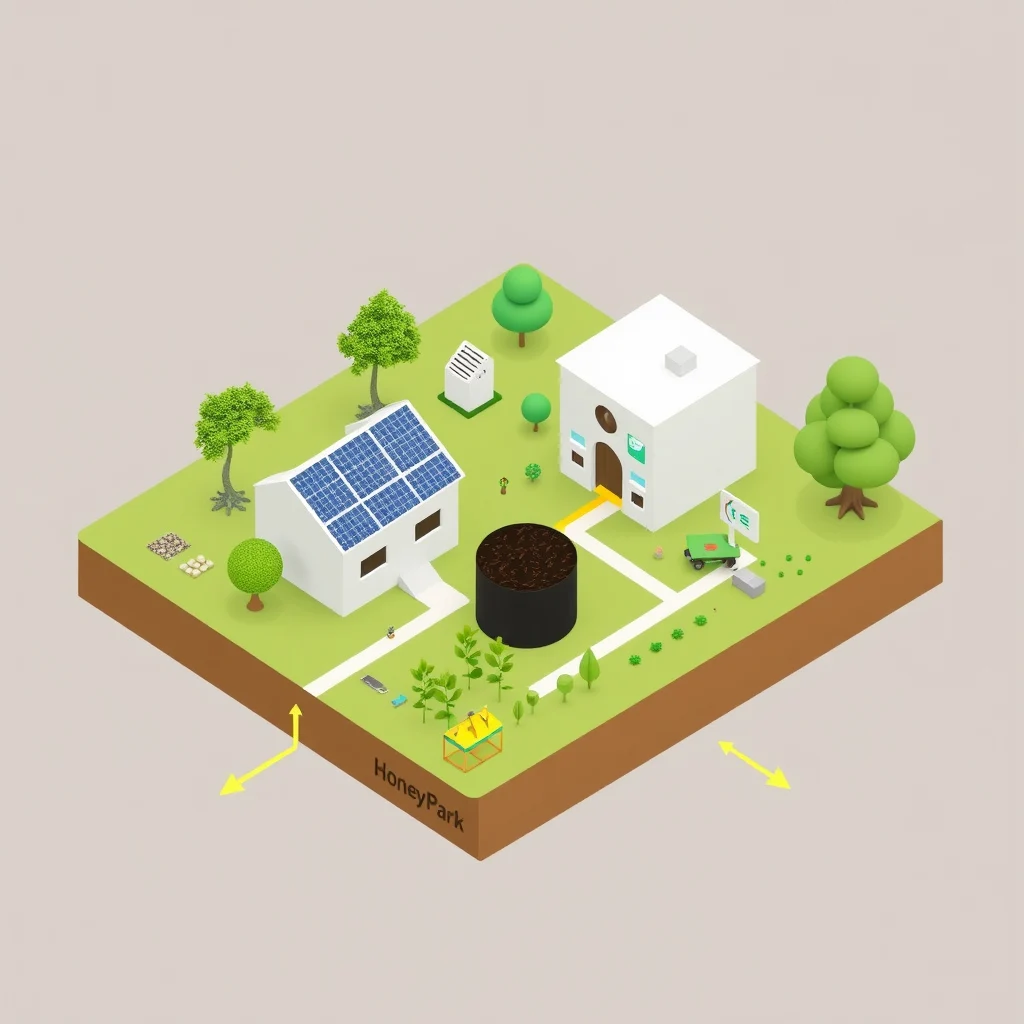
The path to a sustainable future in the Middle East requires more than just standard renewable energy installations; it demands specialized infrastructure tailored to the region's extreme arid conditions. A primary example of this is the 2nd Solar Project at Honey Park, a milestone initiative fully funded by the Technology Innovation Institute (TII), Abu Dhabi.
This project represents a critical alignment between national funding bodies and local research execution, effectively closing the gap between high-level policy and field-ready technology. This model of collaboration is a core element of the R&D Strategy & Professional Stewardship framework required to meet the UAE’s Net Zero 2050 mandate.
The Role of Biochar in Circular Carbon Economies
Beyond direct solar power, the FRC is pioneering research into Biochar as a tool for carbon sequestration and soil enhancement. By converting organic waste into stable carbon, we are creating a circular system that addresses both waste management and agricultural resilience. This technical diversification is a key outcome of our [Innovation Roadmapping Services], ensuring that energy projects are not just isolated installations but integrated components of a broader industrial roadmap.
Operationalizing Sustainable Infrastructure at Honey Park
The solar installation at Honey Park serves as a "Living Lab," providing real-time data on how photovoltaic systems perform in high-heat, high-dust environments. By testing these systems in tandem with our agricultural and bee research, we are creating a holistic energy-water-food nexus. This localized data is essential for building a Defensible R&D Execution Strategy that protects institutional investments and ensures long-term operational viability in the region.
Expert Q&A: Scaling Energy Innovation in the UAE
Why is the funding from TII Abu Dhabi significant for this specific solar project?
It demonstrates the "Triple Helix" in action. When a major technology institute like TII funds a localized project at FRC, it validates the research's strategic importance to the UAE’s broader Energy Transition and ensures that the findings are integrated into the national innovation pipeline.
How does Biochar complement renewable energy projects?
While solar reduces carbon emissions, Biochar actively removes carbon from the atmosphere and stores it in the soil. This "Carbon Negative" technology is a vital pillar of our R&D Strategic Alignment, helping industries offset their footprint while improving the productivity of arid lands.
What is the long-term objective of the Honey Park Solar Project?
The goal is to establish a blueprint for self-sustaining, off-grid industrial and agricultural hubs. By proving that renewable energy can power complex research sites in the desert, we provide a scalable model for the UAE's industrial future.