Harmful Algal Blooms (HABs) can cause significant ecological and economic disruption, affecting everything from local fisheries to desalination plant operations. Because these blooms can develop rapidly across vast areas of the ocean, traditional ship-based sampling is often too slow to provide an effective warning. At the forefront of marine protection is the use of satellite-based algal bloom detection, a method that turns orbital data into an early warning system.
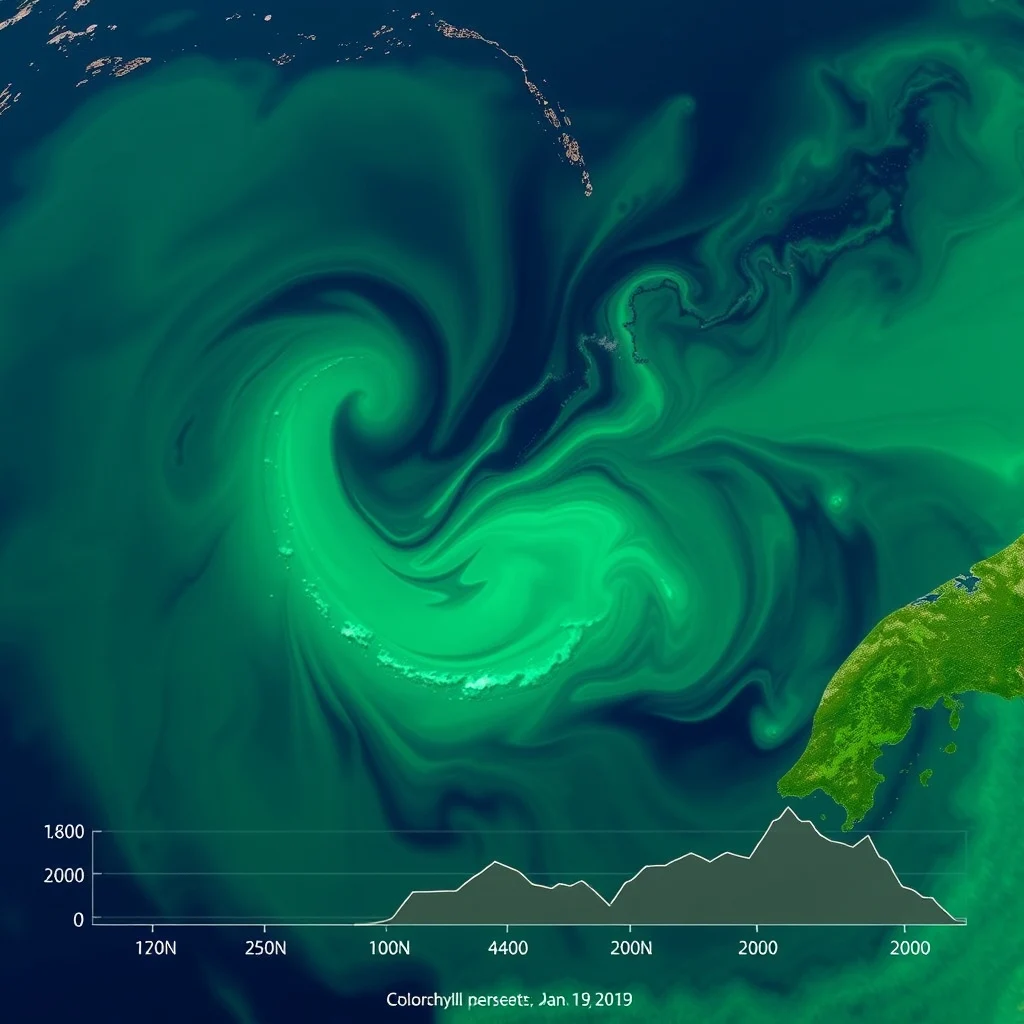
Identifying the Spectral Signature of Chlorophyll
Algae, like land plants, contain chlorophyll a, a pigment that absorbs specific wavelengths of light for photosynthesis. When an algal bloom occurs, the concentration of chlorophyll a in the upper layers of the ocean increases dramatically.
Satellites equipped with multispectral sensors, such as the European Space Agency’s Sentinel-3, monitor the "ocean color." By analyzing the reflectance of light in the blue and green bands, scientists can calculate the concentration of chlorophyll.
A high absorption of blue light and a high reflectance of green light indicate a high density of algae. This spectral signature allows researchers to distinguish between normal seawater and a burgeoning bloom long before it is visible to the naked eye at the surface.
Beyond Color: Fluorescence and Thermal Imaging
In the complex waters of the Arabian Gulf and the Gulf of Oman, "color" alone isn't always enough to identify a bloom, as suspended sediment or dissolved organic matter can mimic the appearance of algae. To increase accuracy, researchers utilize Fluorescence Line Height (FLH).
This technique measures the faint glow, or fluorescence, that chlorophyll emits when excited by sunlight. Since sediments do not fluoresce, this data helps confirm that a detected patch is indeed biological. Additionally, thermal infrared sensors are used to track sea surface temperatures (SST). Many harmful species thrive in specific temperature windows; by overlaying thermal maps with chlorophyll data, scientists can predict not only where a bloom is, but how fast it is likely to grow.
From Data to Coastal Protection
The real-time nature of satellite monitoring allows for rapid response protocols. When a potential bloom is detected:
Transport Modeling: Surface current and wind data are integrated with satellite imagery to predict the bloom’s movement toward the coast.
Strategic Sampling: Field teams are dispatched to specific GPS coordinates identified by the satellite to take water samples and identify the exact species of algae.
Industrial Alerts: Desalination plants and fish farms receive early warnings to adjust their intake systems or protect their stock, mitigating the economic impact of the event.
Frequently Asked Questions
Can satellites tell if an algal bloom is toxic?
Not directly. While satellites are excellent at detecting the density and location of a bloom, they cannot "see" the toxins themselves. Physical water samples are still required to identify the specific species and determine if it is a harmful variety.
Why is the Gulf of Oman particularly prone to these blooms?
A combination of high water temperatures, seasonal upwelling (which brings nutrients from the deep sea to the surface), and high salinity creates a "perfect storm" for rapid algal growth, making continuous satellite monitoring essential.
How often do satellites scan the coastline for blooms?
Most modern environmental satellites provide a "revisit time" of 1 to 2 days. This high-frequency monitoring is critical because algal blooms can double in size within 24 hours under the right conditions.