Authors: Fatma Alzahraa Mokhtar, Seham S. Elhawary, Amal M. Fakhry, Aseela Abdulla Almoalla, Khawla Mohammed Alyammahi, Youssouf Belaid, Karim Abdelazim, Ahmed Hamdy Zabady, Heba A. Yassin, Hanan M. Elnahas and Ali El-Keblawy.
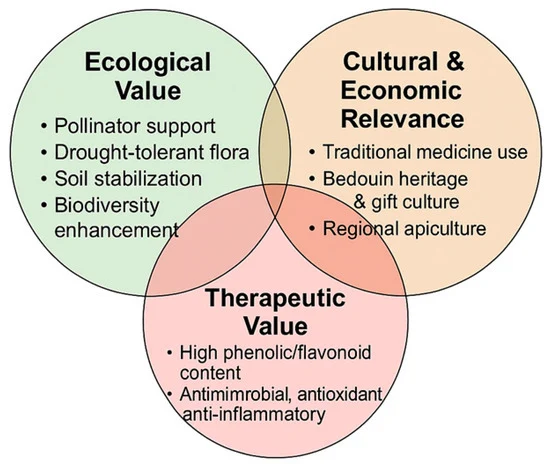
Multidimensional value of Vachellia tortilis and Ziziphus spina-christi honeys: ecological, therapeutic, and cultural dimensions. The diagram summarizes the overlapping contributions of these honeys to pollinator ecology, traditional medicine, and regional apiculture in arid environments.
Abstract: Honey production has been an integral part of the UAE’s heritage. Vachellia tortilis and Ziziphus spina-christi pollen and nectar are essential components of high-quality UAE honey. These plants are integral to Emirati culture, showcasing a legacy of ecological balance and medicinal uses. In addition to their cultural significance, V. tortilis and Z. spina-christi offer substantial pharmacological and ecological value. This review explores the role of V. tortilis and Z. spina-christi in producing honey rich in bioactive compounds with antimicrobial, antioxidant, and anti-inflammatory properties, highlighting their therapeutic potential in addressing infectious and chronic diseases. Furthermore, the diversity of phytochemicals in the honey from these plants supports their use in pharmaceutical advancements, including cancer and antibacterial treatments. Their apicultural importance is also emphasized, particularly in supporting sustainable honey production systems adapted to arid environments. The eco-friendly production of silver nanoparticles from Z. spina-christi demonstrates their versatility for health and agriculture. By exploring views on honey authenticity, advanced extraction methods, and the medicinal benefits of honeybee products, this study promotes these species’ conservation and sustainable use. The study emphasizes the contributions of V. tortilis and Z. spina-christi to ecological stability, public health, and economic growth. It presents a compelling case for leveraging their potential to advance sustainable apiculture and ecosystem management in arid regions.