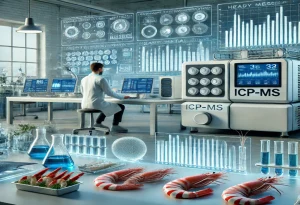
Seafood is a nutritious part of a balanced diet, providing proteins, omega-3 fatty acids, vitamins, and minerals. However, environmental pollution can lead to the accumulation of heavy metals in seafood, which may pose health risks. Metals like mercury, lead, cadmium, and arsenic can build up in marine organisms and affect humans when consumed.
To ensure seafood safety, scientists use Inductively Coupled Plasma Mass Spectrometry (ICP-MS), a powerful technique for detecting even trace amounts of heavy metals. ICP-MS works by turning the sample into ions using high-temperature plasma and then measuring their mass-to-charge ratios with high precision.
This method offers several advantages: it is extremely sensitive, can detect multiple metals at once, and provides rapid results suitable for large-scale testing. Proper sample preparation, including homogenization, acid digestion, and calibration, is essential for accurate analysis. Quality control measures, like certified reference materials and internal standards, ensure reliable results.
ICP-MS helps monitor seafood for regulatory compliance, assess health risks, track environmental pollution, and support research on metal accumulation in marine life. By using these advanced methods, we can enjoy seafood safely while protecting public health.
Reference:
Fujairah Research Centre