The Scale Problem in Arid Resource Management
Traditional environmental monitoring often lacks the surgical precision and scale required for national-level impact. Many organizations struggle with "Innovation Theatre"—collecting vast amounts of data without a clear path to application. As we discussed in our guide on R&D Strategy & Professional Stewardship, successful projects must bridge the gap between small-scale lab experiments and large-scale national implementation. Without an automated way to monitor biological assets, resources like the Ghaf and Acacia trees remain vulnerable to unmapped environmental shifts.
AI-Integrated Industrial Roadmapping
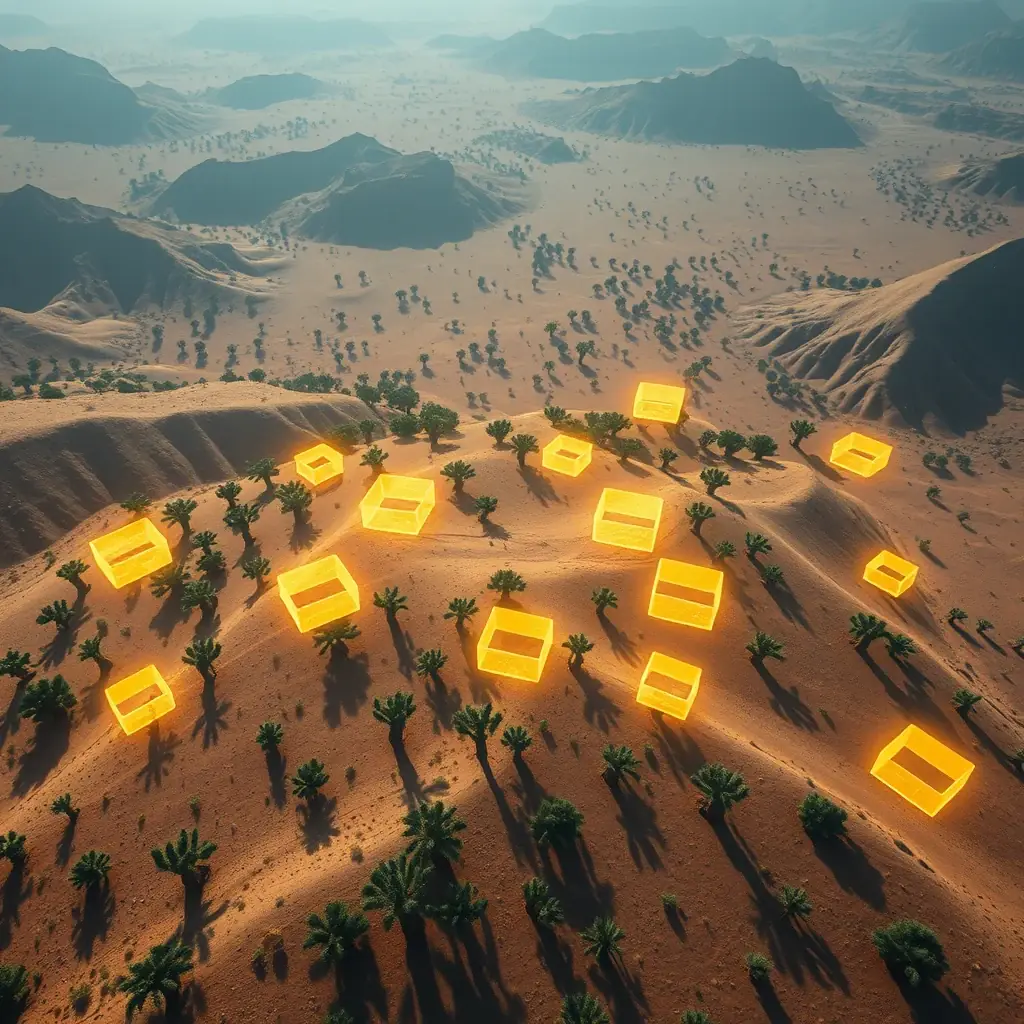
To move beyond manual surveys, the Fujairah Research Centre (FRC) has operationalized Industrial Roadmapping through the integration of AI and Unmanned Aerial Vehicles (UAVs). This is not just a study; it is a scalable system for resource sovereignty.
By deploying UAV-based imaging and Transformer-based Semantic Segmentation Architectures, we have moved from "observation" to "automated intelligence." This strategy, supported by our Innovation Roadmapping Services, focuses on:
Efficient Large-Scale Mapping: Utilizing deep learning to identify and map Acacia Tortilis and Ghaf trees across vast arid landscapes.
Transformer-Based AI: Implementing cutting-edge architectures to ensure high-accuracy detection in complex, low-contrast desert environments.
Resource Inventory: Creating a verifiable, digital record of national biological assets to inform land-use policy.
A Prevention and Monitoring Tool
The results published in the ISPRS Annals demonstrate that this AI framework serves as a vital tool for prevention, monitoring, and conservation. By knowing the exact location and health of every tree, we can predict environmental degradation before it occurs. This is the hallmark of Professional Stewardship: using technology to create a preventive shield around a nation’s most vital natural resources.
Expert Q&A: AI in Industrial Roadmapping
Why use "Transformer-based" architectures for tree mapping?
Standard AI often struggles with the irregular shapes of desert trees. Transformers enable the system to comprehend the context of the entire landscape, resulting in significantly higher accuracy in "Efficient Large-scale Mapping." This is a key technical component of a modern R&D Execution Strategy.
How does this mapping contribute to the UAE’s sustainability goals?
You cannot conserve what you cannot see. By digitizing our forests, we provide the data needed for carbon sequestration tracking and reforestation efforts, aligning perfectly with national Net Zero mandates.
Is this system scalable for other industrial uses?
Absolutely. The same Industrial Roadmapping logic we applied here can be used for infrastructure monitoring, agricultural health checks, and urban planning. It is about building the AI "eyes" for the nation's decision-makers.