In controlled-environment agriculture, success relies heavily on the accuracy of the nutrient delivery system, especially in the absence of soil. At the Fujairah Research Centre (FRC), managing hydroponic nutrients is regarded as a branch of chemical engineering. By dissolving essential mineral elements in water, researchers can supply plants with the precise ratio of nutrients needed at each growth stage. This approach significantly reduces water usage and eliminates the runoff typically associated with traditional farming methods.
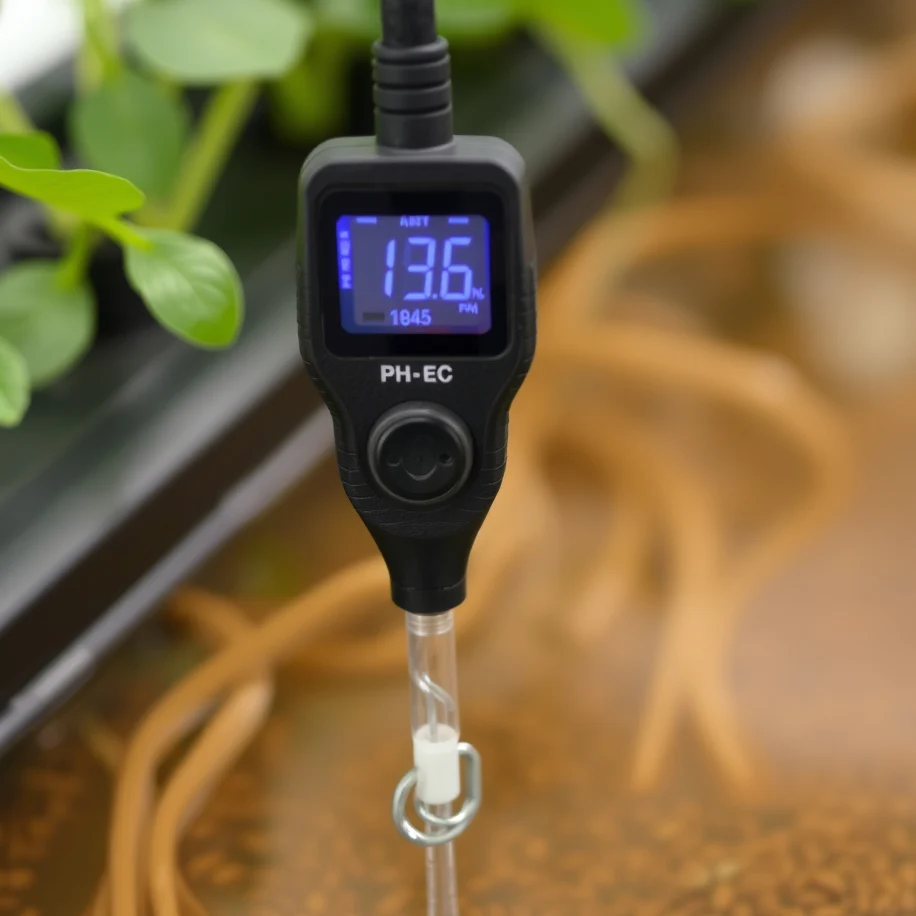
The Chemistry of Nutrient Availability
A hydroponic solution must contain all sixteen essential elements for plant growth, divided into macronutrients (nitrogen, phosphorus, potassium) and micronutrients (iron, manganese, zinc). However, simply adding these minerals to water is not enough. The "bioavailability" of these nutrients is strictly governed by the potential of Hydrogen (pH) of the solution.
If the pH levels drift outside the optimal range—typically 5.5 to 6.5—certain elements become "locked out." For instance, iron becomes insoluble at higher pH levels, leading to chlorosis, while phosphorus availability drops in acidic conditions. FRC utilizes automated dosing systems that monitor pH in real-time, injecting dilute acids or bases to maintain the chemical equilibrium necessary for maximum nutrient uptake.
Precision Monitoring via Electrical Conductivity
To quantify the concentration of dissolved salts in the system, scientists monitor Electrical Conductivity (EC). Since pure water is a poor conductor, the ability of the solution to carry an electric current is a direct proxy for its nutrient density.
Different crops require different EC setpoints; leafy greens like lettuce thrive in low-conductivity environments, while fruiting plants like tomatoes require a much higher concentration of ions to support fruit development. FRC’s management protocols involve continuous EC sensing to ensure that the solution does not become too concentrated, which can lead to osmotic stress, or too dilute, which results in nutrient deficiencies. This balance is critical in the UAE's high-temperature environments, where plants transpire water at rapid rates, naturally increasing the salt concentration in the reservoir.
The Shift Toward Ion-Selective Analysis
While EC measures the total amount of dissolved solids, it does not distinguish between individual nutrients. The next frontier in hydroponic nutrient management at FRC involves the use of Ion-Selective Electrodes (ISE). This technology enables the specific monitoring of individual ions, such as nitrate (NO3^-), Potassium (K^+), and Calcium (Ca^{2+}).
By understanding exactly which nutrients the plants are consuming in real-time, researchers can "top up" specific elements rather than replacing the entire nutrient reservoir. This level of precision results in a truly closed-loop system, minimizing waste and ensuring that the chemical composition of the water remains perfectly aligned with the plant's metabolic needs. This data-driven approach is essential for scaling high-tech greenhouses that can produce food sustainably in arid regions.
Frequently Asked Questions
Why is pH monitoring so critical in a hydroponic system?
The pH level determines whether a plant can actually absorb the minerals present in the water. Even if the water is full of nutrients, a pH that is too high or too low causes "nutrient lockout," where the elements become chemically unavailable to the plant roots.
What is the difference between EC and Ion-Selective monitoring?
Electrical Conductivity (EC) tells you the total concentration of all salts in the water, but it doesn't tell you the "recipe." Ion-selective monitoring is more advanced because it identifies the specific levels of individual nutrients like nitrogen or potassium, allowing for much more precise adjustments.
Does hydroponic nutrient management save more water than soil farming?
Yes. Because the nutrient solution is contained within a closed loop and recirculated, water is only lost through plant transpiration. This method uses up to 90% less water than traditional soil-based agriculture, where most water is lost to evaporation or deep drainage into the earth.