Authors: François Mitterand Tsombou, Maryam Ali Saeed Mohamed Alhmoudi, Ahmed Mohamed Saeed Ali Alhmoudi, Fouad Lamghari Ridouane, Aishah Saeed Sulaiman Al Dhanhani & Subraelu Pakam.
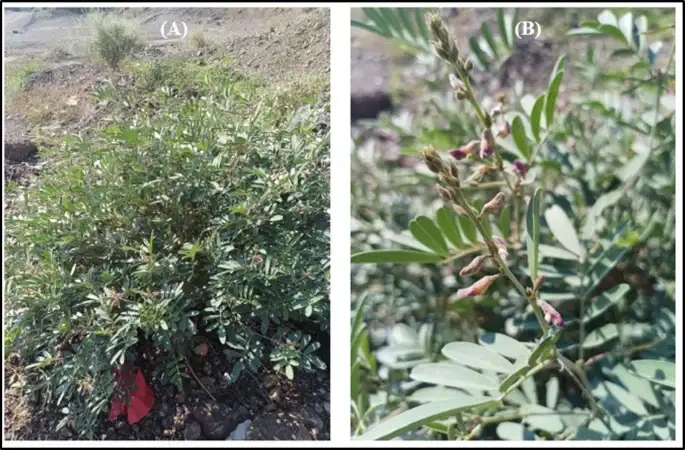
Plant of Tephrosia apollinea (A) and the flowers (B) growing in the Emirate of Fujairah.
Abstract: Arid environments are characterized by extreme weather conditions which strongly affect plant physiology. Overstory plants layer can increase stress resilience of the understory plants than those exposed to direct sunlight. To verify this assumption, Tephrosia apollinea plant samples were collected under different canopies positions of Acacia tortilis (open area, east, and west) and subjected to phytochemical and antimicrobial analyses considering plant organ-age, and sunlight parameters. Based on the current findings, PPFD (1351.3 µmol.m− 2.s− 1), PFD-UV (24.87 µmol.m− 2.s− 1) and PFD-FR (404.78 µmol.m− 2.s− 1) values were greater in the open area. Calcium (2820.6 mg/100 g), phosphorous (1677.76 mg/100 g), magnesium (492.26 mg/100 g), and zinc (9.13 mg/100 g) levels were higher in the young leaves. Dry matter (62.80%), crude fibre (10.73%), ash (4.83%), TDN (66.34%), tannins (2.42%), and total flavonoids (3162.66 mg/kg) amounts were much higher in the mature leaves, and the opposite trends were noticeable in the branches. The amounts of crude protein (8.53%) were greater in the young than mature organs. Strongest antimicrobial activities effects were recorded in the young than mature organs with east and west locations showing more effects. The inhibition zones ranging from 10 to 14 mm. The findings of this study indicate that microenvironments of understory plants can greatly enhance their survival capacity, which could help in improving medicines and food production in the arid regions.