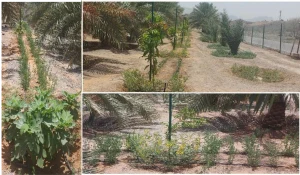
Permaculture is a nature-based approach to agriculture that aims to create sustainable and resilient ecosystems. Instead of working against nature, permaculture designs agricultural systems that mimic natural processes, allowing plants to grow together in balanced and productive environments while using fewer resources.
This approach is especially suitable for arid and mountainous regions such as the Fujairah Mountains. Permaculture systems combine native forest trees, date palms, fruit trees, legumes, grasses, vegetables, and herbs in layered structures. These layers provide shade, protect the soil, conserve water, and support biodiversity, making agriculture more sustainable over the long term.
One of the major challenges in Fujairah is poor soil quality and soil erosion caused by wind and heavy rainfall. Native trees play an important role in stabilizing the soil through their deep and widespread root systems. In a well-designed permaculture system, multiple root layers help hold the soil together, while diverse plant cover prevents the ground from drying out and supports healthy soil microorganisms.
Intercropping is a key permaculture technique with strong potential for restoring landscapes in Fujairah. This method involves growing more than one type of plant in the same area, such as native legumes with grasses or cereals beneath forest trees or date palms. Legumes naturally improve soil fertility by fixing nitrogen, reducing the need for chemical fertilizers. Their deeper roots also help plants share water more efficiently, increasing resistance to drought.
Date palms are particularly well suited to desert permaculture systems. They create a protective canopy that reduces heat and water loss while allowing enough space for crops to grow underneath. This shaded environment makes it possible to cultivate vegetables, herbs, legumes, and fruit trees that would otherwise struggle in extreme heat.
Native forest trees also act as natural windbreaks, protecting crops from harsh desert winds. Integrating fruit trees such as pomegranates, figs, guavas, and citrus as a middle layer further increases biodiversity and productivity. These trees have deeper roots than date palms, helping improve water use efficiency and overall system stability.
Water management is essential for successful permaculture in dry regions. Efficient irrigation methods such as subsurface irrigation deliver water directly to plant roots, reducing evaporation. When combined with mulching and small-scale rainwater harvesting, these techniques help conserve water and reduce maintenance needs.
Implementing permaculture systems across different landscapes—mountain slopes and lowland areas—can significantly improve vegetation cover, reduce soil erosion, and enhance resilience to climate change. By working with nature, permaculture supports food security, environmental restoration, and sustainable land use.
Desert permaculture under forest and date palm canopies offers a promising solution for greening the Fujairah Mountains and building a more resilient agricultural future. Reference
Fujairah Research Centre