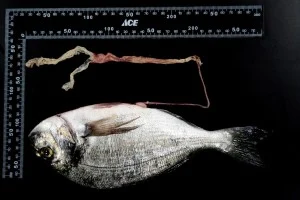
During a routine scientific examination of a European seabream, researchers made a concerning discovery: a large piece of plastic, nearly 22 centimeters long, was found inside the fish’s intestine. The examination was originally conducted to study a common fish parasite, but instead revealed a clear example of how plastic pollution is affecting marine life. Marine animals often mistake plastic for food. Once ingested, plastic can block the digestive system, making it difficult or impossible for the animal to absorb nutrients. In this case, the plastic caused a serious blockage, which could lead to malnutrition, weakness, internal injuries, or even death. Sharp edges of plastic can also damage internal organs and increase the risk of infection. This discovery highlights how widespread plastic pollution has become in the oceans. From small fish to large marine mammals, many species are now impacted by plastic waste. These findings remind us that plastic pollution is not only an environmental issue but also a serious threat to marine ecosystems. Reducing plastic use, recycling responsibly, supporting clean-up initiatives, and raising awareness can all help reduce the amount of plastic entering our oceans. Small actions, when taken collectively, can make a meaningful difference in protecting marine life and preserving ocean health for future generations.
Reference:
Fujairah Research Centre