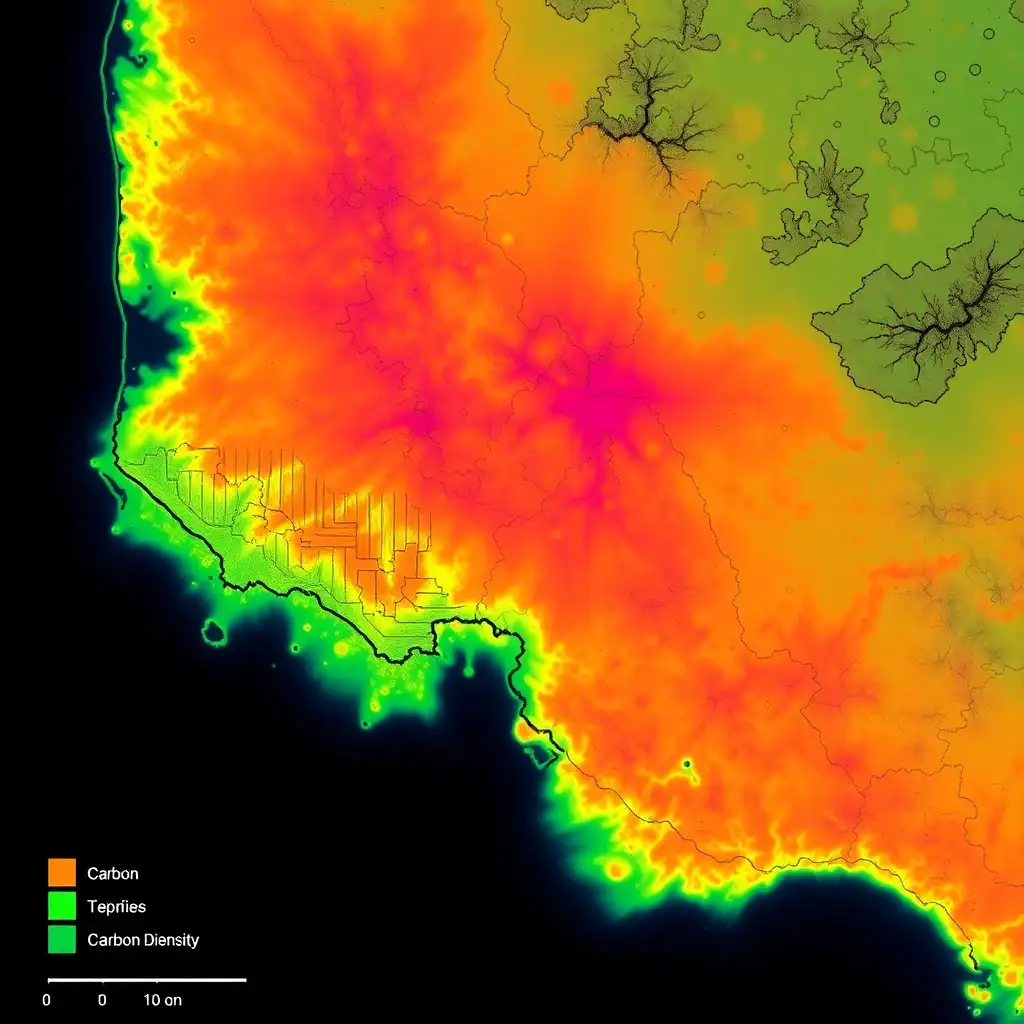
Mangrove ecosystems are among the most efficient carbon sinks on the planet, sequestering significantly more carbon per unit area than terrestrial forests. This capacity, often referred to as "Blue Carbon," is vital for global climate regulation. However, accurately measuring mangrove carbon sequestration across vast, inaccessible coastal intertidal zones requires a transition from manual sampling to advanced remote sensing and satellite-based modeling.
The Role of Multispectral Imagery
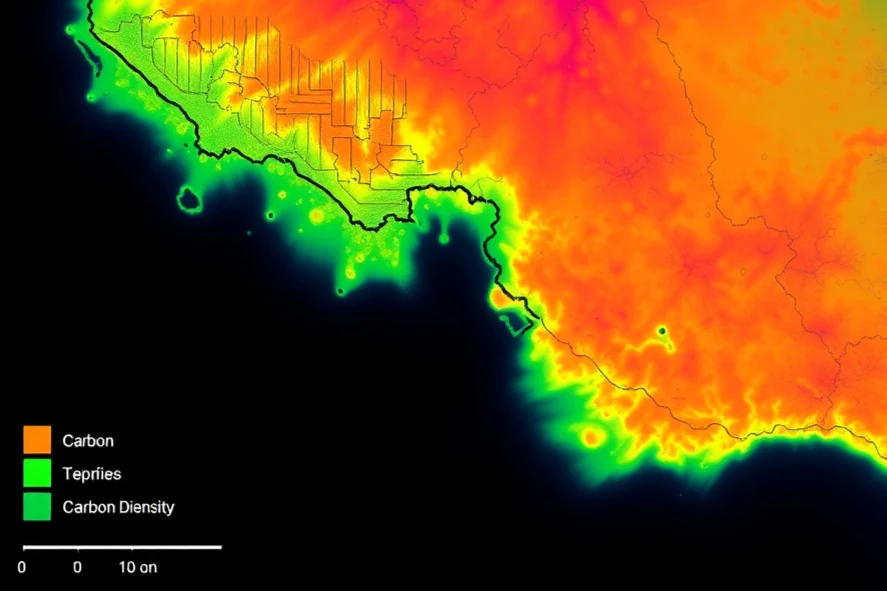
To estimate carbon stocks, researchers utilize high-resolution satellite data from platforms like Sentinel-2. These satellites capture light reflected from the mangrove canopy across multiple spectral bands. By analyzing the ratio between the Near-Infrared (NIR) and Red bands, scientists calculate the Normalized Difference Vegetation Index (NDVI).
NDVI serves as a proxy for chlorophyll content and vegetation health. High NDVI values correlate with dense, productive mangrove canopies, which indicates higher rates of photosynthetic activity and, consequently, higher rates of carbon dioxide (CO_2) absorption from the atmosphere.
From Biomass to Carbon Calculation
Mapping the extent of the forest is only the first step. To quantify actual carbon storage, remote sensing data is integrated into allometric equations. These mathematical models convert measurable parameters—such as canopy height and crown diameter—into Total Above-Ground Biomass (TAGB).
Radar and LiDAR Integration: While optical satellite imagery provides 2D area data, Synthetic Aperture Radar (SAR) is used to measure the 3D structure. These sensors can penetrate the canopy to provide height data, a critical variable in biomass calculations.
Conversion Factors: Once the biomass is estimated, a carbon conversion factor (typically around 0.45 to 0.50) is applied to calculate the total megagrams of carbon stored.
Monitoring Soil Organic Carbon (SOC)
A significant portion of mangrove carbon sequestration occurs below ground in the anaerobic soil. Satellite imagery aids in monitoring this "invisible" carbon by tracking changes in tidal inundation and sediment types. By combining satellite-derived vegetation indices with hydrological models, scientists can predict the accumulation of soil organic carbon. This holistic view is essential for protecting these ecosystems, as any disturbance to the mangroves can lead to the rapid release of stored carbon back into the atmosphere.
Frequently Asked Questions
How can a satellite "see" carbon in a mangrove forest?
Satellites measure reflected light to determine the density and health of the leaves (NDVI). Scientists then use mathematical models to correlate this "greenness" and the forest's structure with the physical weight of the trees, which is approximately 50% carbon.
Why are mangroves better at sequestering carbon than inland forests?
Mangroves store carbon in their wood and the waterlogged, oxygen-poor soil around their roots. Because the soil is anaerobic, organic matter decays very slowly, allowing carbon to be trapped underground for centuries.
What is the benefit of using Radar (SAR) instead of just regular photos?
Standard photos only show the canopy surface. Radar (SAR) can penetrate the canopy to measure the structure and height of the trees. Since taller trees store more carbon, this 3D data is vital for accurate carbon accounting.