Authors: François Mitterand Tsombou, Maryam Ali Saeed Mohamed Alhmoudi, Ahmed Mohamed Saeed Ali Alhmoudi , Fouad Lamghari Ridouane & Amani Jumah Ahmed Meleih Aldhanhani.
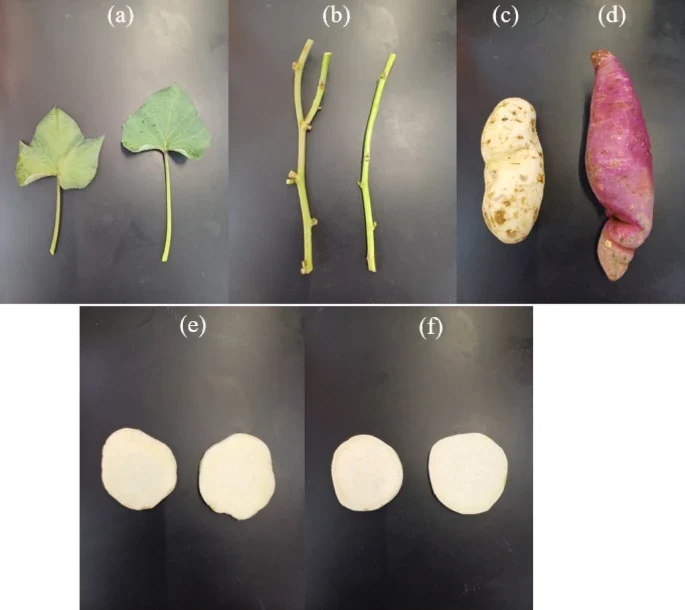
Tested plant organs: Leaves (a), stem (b), yellow cultivar tuber (c), white cultivar tuber (d), slices of the yellow and white tubers (e), and (f) of Ipomea batatas.
Abstract: Sweet potato is considered one of the crops enriched with valuable nutritional components, and this plant might possess strongest inhibitory allelochemicals. The present work evaluated the nutritional value and the allelopathic effects of sweet potatoes on seed germination and seedlings performance of Prosopis juliflora. The findings revealed that leaves of sweet potatoes contain more calcium, magnesium, manganese, zinc, copper, protein and flavonoids than the other organs. Food exposure to direct solar positively affected the amounts of phosphorous, magnesium, zinc dry matter, Total Digestible Nutrients (TDN), while greater levels of sodium, potassium, protein, fibres, ash, and flavonoids were recorded indoor. Exposing the samples for 15 and 25 min showed higher values of phosphorous, sodium, fibres, TDN, flavonoids, and fat compared with the non-treated samples. While the values of Total Dissolved Solids (TDS), Electrical conductivity (EC) and salinity were higher in the sweet potatoes shoot water extracts, those of pH were lower. Shoot water extracts exhibited strongest inhibitory effects on the seeds and seedlings responses than the tubers. Electrolyte leakage values were greater in the seedlings treated with shoot water extracts than the tubers. The results of this study demonstrate that growing sweet potatoes in the arid regions significantly improve its nutritional values which could be beneficial for human health. Furthermore, based on the results, proper attention should be given when drying the sweet potatoes to avoid nutrients damage. The tested shoots could be used to control the proliferation and the nuisances of P. juliflora plants in the introduced range.