In the extreme heat of the Arabian Peninsula, a greenhouse is more than just a glass structure; it is a high-precision pressure cooker that must be constantly cooled against overwhelming thermal loads. Achieving a stable internal environment when external temperatures exceed 45°C requires the sophisticated orchestration of greenhouse climate control systems. This is not merely about "turning on the AC"; it is a complex exercise in thermodynamics, vapor pressure deficit (VPD) management, and sensor-fusion automation.
The Physics of Cooling in Arid Zones
The primary challenge in desert greenhouse engineering is the removal of solar heat gain without exhausting the facility's water and energy budgets. Most advanced systems utilize a combination of evaporative cooling (fan-and-pad systems) and high-pressure misting.
As hot, dry air passes through water-saturated cellulose pads, the energy from the air is used to evaporate the water, significantly lowering the temperature. However, this process increases humidity. If the humidity rises too high, the plant’s ability to transpire—and thus cool itself—is compromised. To prevent this, automated controllers must constantly calculate the "Enthalpy" of the air, balancing the cooling effect against moisture levels to ensure the atmosphere remains conducive to plant health.
Managing the Vapor Pressure Deficit (VPD)
Sophisticated growers look beyond simple temperature and humidity readings, focusing instead on the Vapor Pressure Deficit (VPD). VPD is the difference between the amount of moisture in the air and how much moisture the air can hold when saturated. It is the true driver of plant transpiration.
When the VPD is too low due to high humidity, plants cannot "sweat," which can lead to nutrient deficiencies and fungal outbreaks. Conversely, when the VPD is too high due to extreme dryness, plants close their stomata to prevent dehydration, which halts photosynthesis and growth. Greenhouse climate control software uses real-time data from leaf-temperature sensors and hygrometers to maintain a "sweet spot"—typically between 0.8 and 1.2 kPa—ensuring that the plants remain in a constant state of peak metabolic activity regardless of the harsh conditions outside the glass.
Sensor Fusion and Predictive Automation
The "intelligence" of a modern greenhouse lies in its controller's ability to anticipate changes rather than simply reacting to them. This is achieved through sensor fusion, where data from internal sensors is combined with external weather station forecasts.
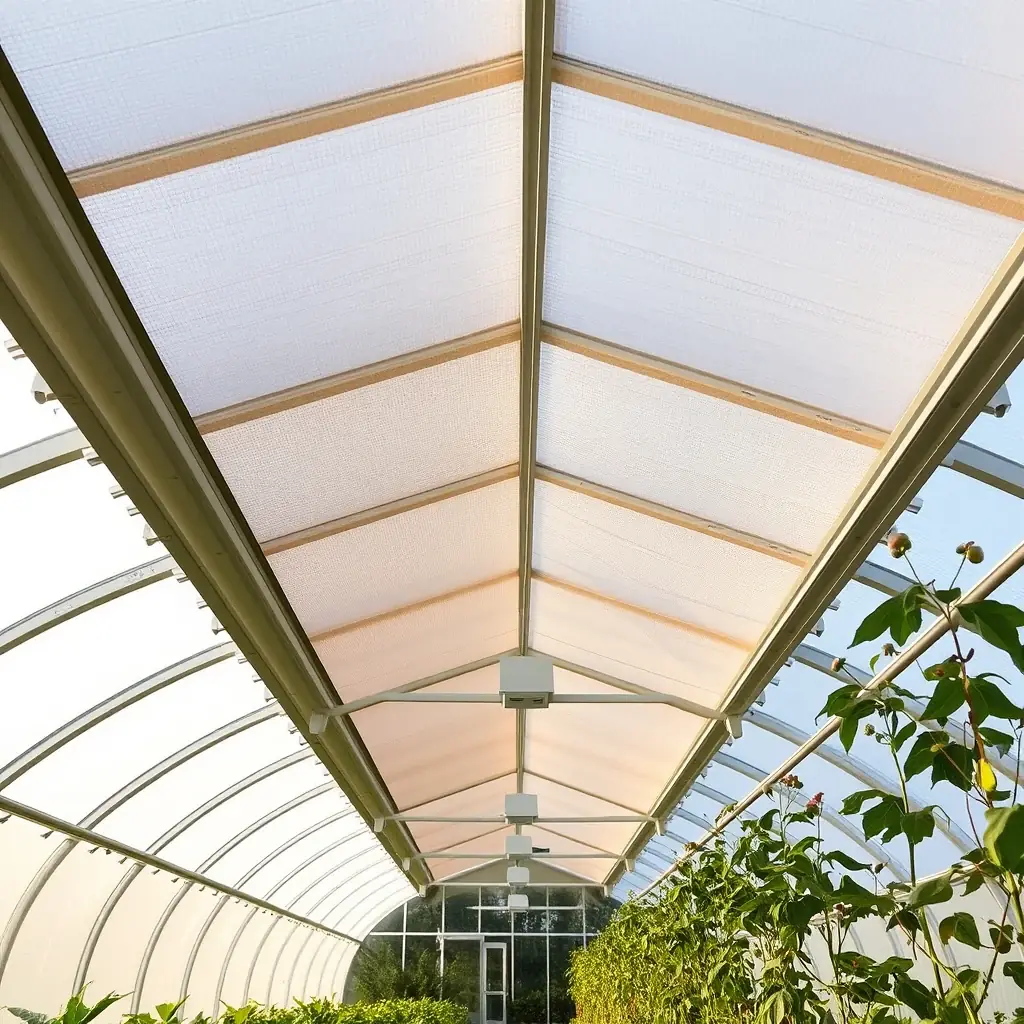
If a weather station predicts a sudden spike in solar radiation or a dust storm, the climate control system can pre-emptively deploy external shading screens and adjust the ventilation rates before the internal temperature begins to rise. This "feed-forward" logic prevents the thermal "overshoot" that can stress sensitive crops. Furthermore, integrated CO2 dosing systems monitor the carbon dioxide levels during peak daylight hours. As plants consume CO2 for photosynthesis, the system injects exact amounts of the gas to maintain concentrations (often 800–1000 ppm) that allow for accelerated growth rates compared to outdoor environments.
Energy Integration and Water Recovery
To move toward true sustainability, these systems are increasingly integrated with renewable energy sources and water recovery loops. Advanced greenhouses in the region are exploring Dehumidification and Water Harvest (DWH) technology. By cooling the humid air discharged from the greenhouse, water can be condensed and returned to the irrigation tanks. This circular approach turns the greenhouse into a self-contained biological engine, where energy is used not just to fight the heat, but to recycle every possible drop of water back into the food system.
Frequently Asked Questions
Why is humidity just as important as temperature in a greenhouse?
High humidity prevents plants from transpiring (releasing water). If a plant cannot transpire, it cannot move nutrients from its roots to its leaves, leading to stunted growth even if the temperature is perfect.
What is the benefit of CO2 enrichment in a closed greenhouse?
Outside air has about 400 ppm of CO2. By increasing this to 1000 ppm in a controlled greenhouse, plants can perform photosynthesis more efficiently and grow significantly faster—sometimes up to 40% faster—provided they have enough light and water.
How do automated shading screens save energy?
Shading screens reflect solar radiation before it enters the greenhouse. This prevents the "greenhouse effect" from overheating the interior, which reduces the workload on fans and cooling pumps, leading to substantial electricity savings.