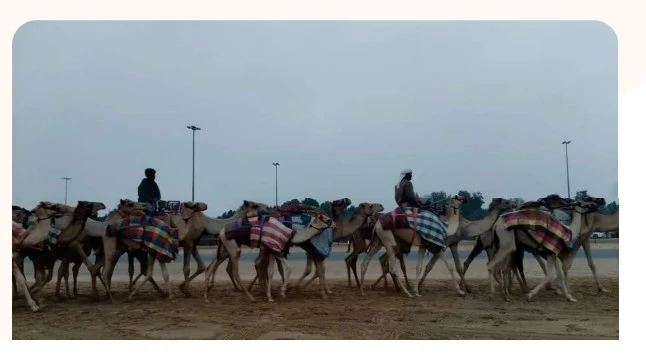
One of the biggest structural problems in traditional camel training is workload imbalance. Training groups often run together, but not all camels have the same fitness level, recovery capacity, or biomechanical profile. Some camels push themselves beyond safe limits because they naturally run harder, while others take it easy and never develop sufficient stamina. The trainer sees the group as a whole, but each camel experiences the session differently.
Overtraining causes:
Decreased long-term performance
Chronic micro-injuries
Poor recovery cycles
Unpredictable form fluctuations
Undertraining results in:
Insufficient endurance
Inability to sustain race-level intensity
Delayed athletic development
IoT eliminates guesswork.Sensors quantify the actual workload on each camel by measuring:
Peak exertion
Fatigue onset
Speed curve stability
Recovery rate after intensity
Total biomechanical load
AI then adjusts training intensity individually, ensuring each camel reaches its optimal training zone. This personalization mirrors elite human sports, where athletes receive customized training based on data — not assumptions. Camels become more resilient, more consistent, and significantly better prepared for competition. Precision replaces approximation.