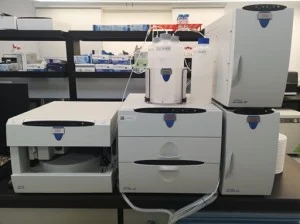
Ion chromatography is a laboratory method used to analyze dissolved ions in water. These ions are divided into two main types: anions, which carry a negative charge, and cations, which carry a positive charge. Measuring these ions is important for understanding water quality in drinking water, environmental monitoring, and industrial applications.
The process works by passing a water sample through a special column filled with ion-exchange material. As the water moves through the column, different ions separate based on their charge and size. A detector then measures each ion, allowing scientists to identify what is present in the water and in what amount.
Common anions found in water include chloride, sulfate, nitrate, phosphate, and bicarbonate. These substances can come from natural sources such as soil and rocks or from human activities like agriculture, wastewater discharge, and industrial processes. Monitoring anions helps detect pollution and assess overall water safety.
Cations such as sodium, potassium, calcium, magnesium, and ammonium are equally important. They affect water hardness, mineral balance, and suitability for drinking or industrial use. Ion chromatography allows these cations to be measured accurately and reliably.
Overall, ion chromatography plays a key role in protecting water resources. It supports clean drinking water, helps safeguard natural ecosystems, and ensures that water used in industries meets required quality standards.
Reference
Fujairah Research Centre