Authors: Manar Ahmed Mohammed Alblooshi, Sirajul Huda Kalathingal, Shaher Bano Mirza, Fouad Lamghari Ridouane.
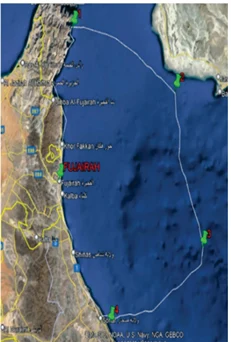
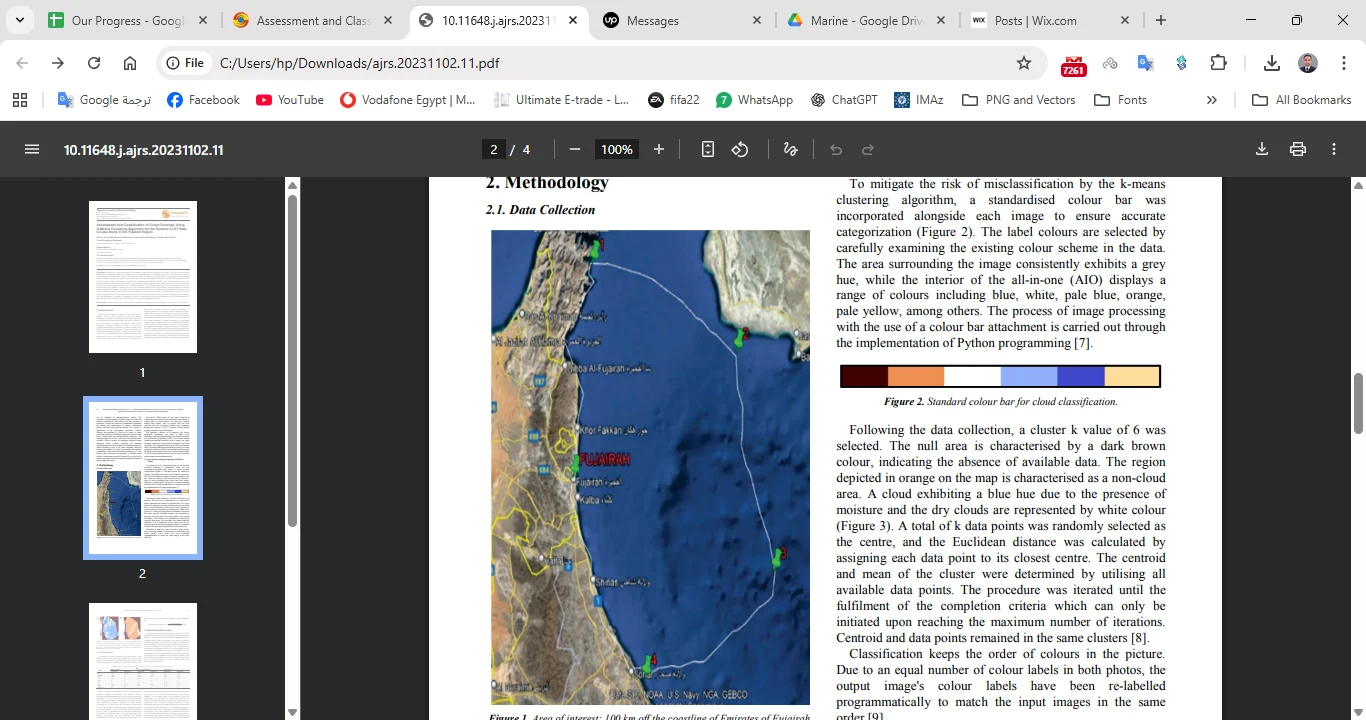
Study area for cloud coverage assessment: 100 km coastal region around Fujairah Emirate using Sentinel-3 LST data and K-means clustering algorithm.
Abstract: Clouds have a significant impact on the planet's energy balance, climate, and weather. They serve as the primary temperature regulator and function as a blanket to absorb thermal energy or longwave radiation. The present study estimates the percentage of rainfall clouds within a 100-kilometer radius of Fujairah City on the Gulf of Oman using image processing based on machine learning and digital image processing. The data for 9 months starting from January 2022 to October 2022 has been retrieved from the Copernicus satellite data component through the Sentinel 3 LST F2 channel. K-mean cluster analysis has been used to validate the accuracy of an algorithm which is applied to determine cloud cover, with a precision rate of 99.9% for clear weather and 95.5% for overcast conditions. The findings indicate that most of the rainy clouds were observed during the months of January and July. The remaining duration of the year exhibits a reduced occurrence of these clouds. Beginning in February, the region of interest experiences cloud cover accompanied by precipitation subsequent to the month of January. Similarly, the month of July exhibited cloud covers with moisture. Throughout the year, dry clouds are observed with moderate coverage percentages. However, there are no observations of any of these clouds during the months of May and December. In summary, automated systems for observing clouds in the atmosphere are a valuable method for detecting cloud cover and predicting climatic patterns in diverse geographical locations.