Authors: Amal Salem Khamis Hamad ALSAMAHI , Hajer Ali Abdulla ALHMOUDI, Shaher Bano MIRZA, and Fouad Lamghari RIDOUANE.
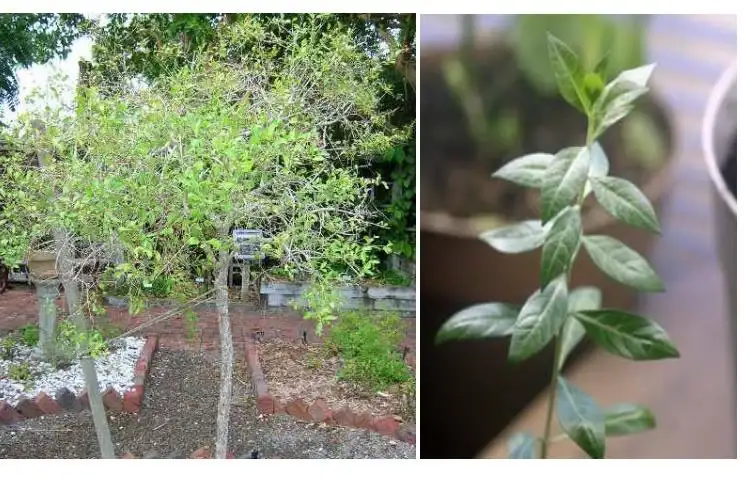
Henna (Lawsonia inermis) tree and leaves from Fujairah, UAE
Abstract: Henna Lawsonia inermis is a versatile that has been highly regarded for centuries due to its cultural and medicinal significance. Henna boasts a rich array of phytochemicals, each contributing to its numerous therapeutic benefits. Th is study provide d a comprehensive assessment of the henna plant and aimed to explore the potential of phytochemicals as candidates for drug development through various analyses including nutritional and mineral composition, antimicrobial activity, docking analysis, and the oretical ADMET Absorption, Distribution, Metabolism, Excretion and Toxicity, toxicity, and druglik e ness evaluation. The 2 plants Samples collected from 2 different locations in Fujairah emirate exhibited significant amount of Potassium, Magnesium, and ca lcium, making them a valuable source of essential minerals . The nutritional and mineral content of the sample was measured using international standard methods Association of Official Analytical Chemists AOAC 2001.11, AOAC 920.39, AOAC 962.29, and AOAC 942.05 )). Antimicrobial assessment done by disc diffusion method revealed potent antibacterial activity against Bacillus cereus and Staphylococcus aureus with inhibition of 30 32 mm and 15 20 mm, respectively, Similarly, it shows antifungal activity against Aspergillus flavus and Candida albicans with inhibition of 9 10 mm and 11 12 mm, respectively. Docking analysis provided insights into the interactions between henna phytochemicals and AcuA protein which elucidate the higher interactions of Agrimonolide 6 O glucopyranoside with binding pocket and surrounding residues with highest binding energy. Similarly theoretical ADMET, toxicity, and drug likeness analysis highlighted Agrimonolide 6 O g lucopyranoside as a promising compound for drug development as well. These findings hold promise for henna plant and Agrimonolide 6 O glucopyranoside’s potential use as a natural alternative to conventional antimicrobial agents. However, additional studies are needed to assess the safety, efficacy, and potential mechanisms of action of these phytochemicals in the henna plant extract.© 2023 International Formulae Group. All rights reserved.