Understanding flowering periods in the UAE is not just about knowing when plants bloom — it is a window into ecosystem stabiliPhenologyUnderstanding flowering periods in the UAE is not just about knowing when plants bloom — it is a window into ecosystem stability, pollinator survival, desert biodiversity, and climate resilience.
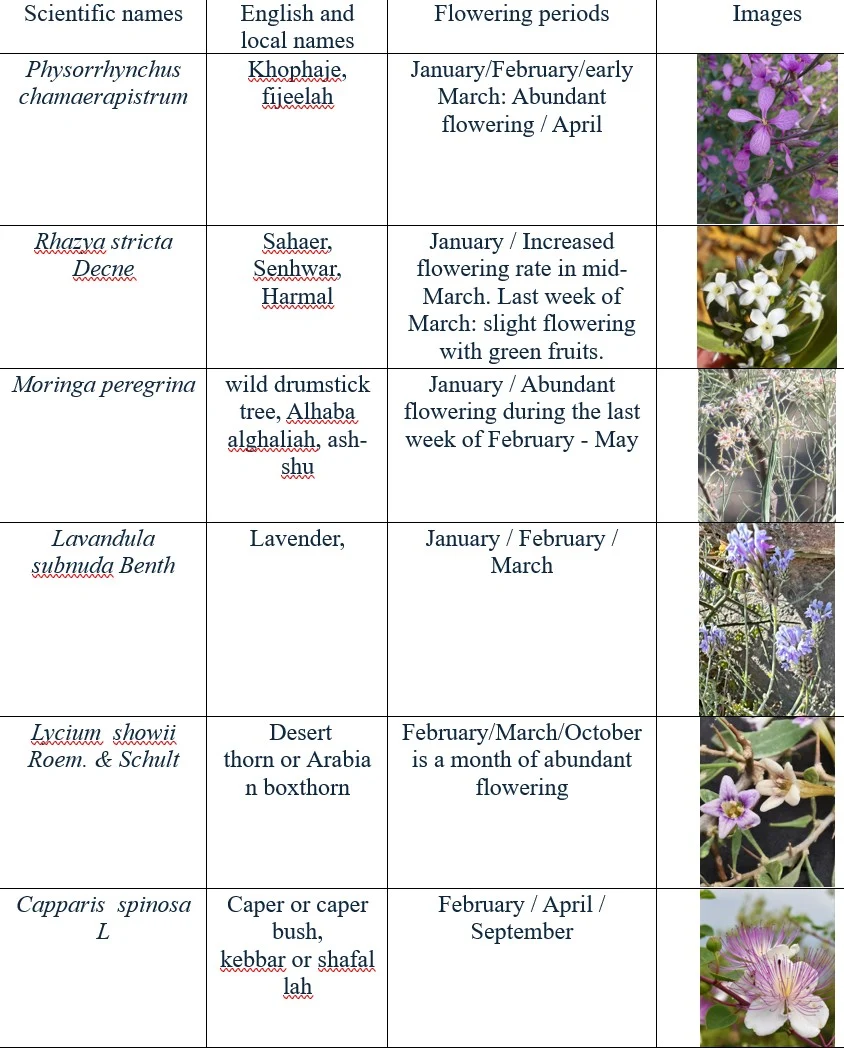
we now have a clear, evidence-based view of the flowering cycles of native UAE species. This data reflects direct observations across mountains, wadis, coastal plains, and desert terrains. Plants Names and Images
Why Flowering Time Matters in the UAE
Flowering (phenology) is a “biological calendar” that reveals:
how plants respond to rain, heat, and drought,
when pollinators like Apis mellifera jemenitica can feed,
which species are resilient to climate change,
and which plants should be prioritized for restoration or honey production.
In an arid environment, blooms often appear in quick, strategic bursts — sometimes right after rainfall, other times aligned to temperature patterns or seasonal humidity.
Key UAE Native Species & Their Flowering Periods
Below is a curated selection of species — chosen for their ecological importance, use in restoration, value for honeybees, or presence across Fujairah’s landscapes — all based on your field data. Plants Names and Images
🌿 Early-Season Bloomers (January–February)
These species signal the beginning of the flowering year in the UAE.
• Physorrhynchus chamaerapistrum — Khophaje
Flowering: January–early MarchFirst widespread blooms of the season, crucial for early pollinators.
• Rhazya stricta — Harmal
Flowering: January; strong bloom mid-MarchA hardy medicinal plant with steady early-season flowering.
• Moringa peregrina — Wild drumstick tree
Flowering: January–MayOne of the longest early bloomers; valuable for biodiversity.
• Lavandula subnuda — Native Lavender
Flowering: January–MarchImportant aromatic species found in mountain habitats.
• Tephrosia apollinea — Dhafra (Cycle 1)
Flowering: February–MarchKey for restoration and soil improvement.
🌼 Spring Peak (February–April): UAE’s Main Flowering Wave
Most species bloom heavily during this window.
• Lycium shawii — Desert Thorn
Flowering: Feb–Mar, with a strong second bloom in October.Excellent for bees; highly drought tolerant.
• Capparis spinosa — Caper Bush
Flowering: February, April, SeptemberA culturally and ecologically important shrub.
• Fagonia indica — Fagon Bushes
Flowering: Feb–May, and again mid-August–SeptemberMedicinal shrub with highly adaptive phenology.
• Tecomella undulata — Desert Teak
Flowering: Feb–Apr (peak), and again in SeptemberA spectacular flowering tree, key for rehabilitation programs.
• Calotropis procera — Sodom Apple
Flowering: February–SeptemberOne of the UAE’s longest-blooming species.
• Convolvulus virgatus — Faghi
Flowering: Feb–SeptA vital forage plant with a long season.
• Ochradenus aucheri — Mountain Stick Flower
Flowering: Feb–Mar and OctoberMountain species with bimodal flowering.
• Rumex vesicarius — Hummad (Rosy Dock)
Flowering: Feb–AprilImportant seasonal plant following winter moisture.
🌱 Mid-Season and Extended Bloomers (March–May)
These species maintain flowering through rising temperatures.
• Lawsonia inermis — Henna
Flowering: March + July–September
• Prosopis cineraria — Ghaf
Flowering: Small blooms Jan–March; strong flowering May–SeptemberCrucial keystone species of the UAE.
• Teucrium stocksianum — Mountain Germander
Flowering: Early MarchMedicinal and culturally important.
• Asphodelus tenuifolius — Onionweed
Flowering: MarchAn annual responding sharply to seasonal rains.
• Tribulus terrestris — Hasak
Flowering: March + August–SeptemberImportant nectar plant for desert bees.
🔁 Summer & Monsoon-Responsive Species (July–September)
These species thrive when humidity rises.
• Tephrosia apollinea (Cycle 2)
Flowering: July–SeptemberA rare dual-cycle flowering plant.
• Senna italica — Ashraj
Flowering: Jan–March + July–SeptemberMedicinal species with excellent adaptive behavior.
• Dyerophytum indicum — Mellah
Flowering: August–SeptemberSeen in rocky and coastal habitats.
• Saccharum ravennae — Ravenna Grass
Flowering: SeptemberRapid post-monsoon growth.
• Acacia nilotica — Gurat
Flowering: SeptemberImportant for shade and habitat restoration.
🍂 Autumn Bloomers (September–October)
Late-season flowering is critical for bees before winter.
• Ziziphus spina-christi — Sidr
Flowering: October–September (nearly year-round)One of the most important honey trees in the UAE.
• Lycium shawii — (Second Peak)
Flowering: OctoberSupports late-season pollinators.
• Ochradenus aucheri — (Autumn Cycle)
Flowering: October
What This Data Tells Us
Based on FRC field observations, several patterns emerge:
1️⃣ The UAE has multiple flowering cycles — not just one.
Many plants display bimodal or even extended flowering windows.
2️⃣ Rainfall triggers sudden blooms.
Species like Senna italica, Tribulus terrestris, and Fagonia indica respond almost immediately after moisture events.
3️⃣ Mountain species behave differently from coastal species.
Temperature, fog, and humidity create micro-phenologies.
4️⃣ Climate change is shifting flowering dates.
Earlier first blooms and delayed late blooms are already noticeable.
Conclusion: A Living Calendar of UAE Biodiversity
Flowering time is more than an academic observation — it is a story of survival, adaptation, and ecological intelligence.Thanks to structured fieldwork and data collection by the Fujairah Research Centre, the UAE now has a clearer understanding of how its native flora behaves, blooms, and responds to its environment. Plants Names and Images
This knowledge supports:
beekeeping and honey production,
restoration and greening projects,
conservation policies,
and climate-change monitoring.