For a coastal nation, Marine Sovereignty extends far beyond the shoreline. However, many R&D initiatives fail because they lack access to the high-tech infrastructure required to study deep-water environments. Without precise data on active faults and sedimentary archives, a nation remains blind to its own geological risks and climate history, creating a "Strategic Gap" in national safety and environmental planning.
High-Tech Execution via the Triple Helix
To address this, the Fujairah Research Centre (FRC) recently participated in the Jaywun Expedition, a multidisciplinary marine research campaign. This mission was a landmark example of the Triple Helix—aligning the Fujairah Environment Authority (FEA), Khalifa University (KU), and the Environment Agency – Abu Dhabi (EAD).
By utilizing the Al Jaywun, the UAE's most advanced research vessel, the team moved beyond theoretical modeling into active field execution:
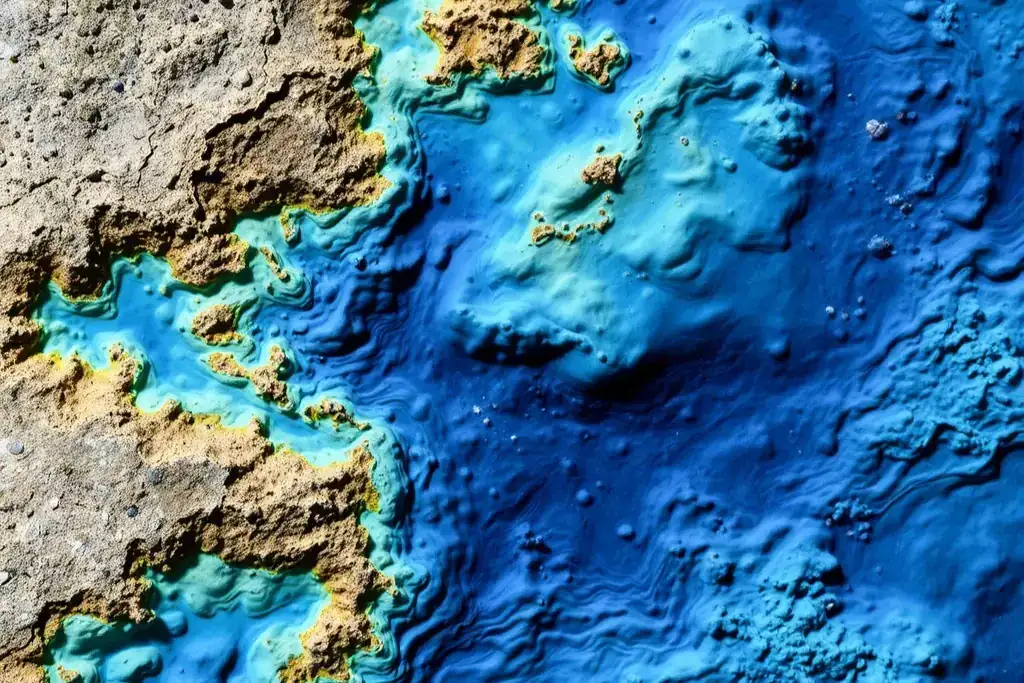
Seafloor Mapping: Utilizing advanced sonar to map the "Sedimentary Archive" of offshore Fujairah.
Fault Detection: Identifying active underwater faults to provide defensible data for national infrastructure safety.
ROV Exploration: Deploying Remotely Operated Vehicles at depths of 30m to capture live high-definition footage of marine ecosystems.
From Raw Data to National Policy
This expedition was not merely a scientific exercise; it was an act of Professional Stewardship. By analyzing the physical and chemical properties of the water column and the seafloor, we are building a national database that informs coastal protection, maritime policy, and climate adaptation. This data ensures that the UAE’s blue economy is built on a foundation of scientific certainty rather than estimates.
Q&A: Navigating Marine Sovereignty
Why is the "Jaywun Expedition" considered a milestone for UAE Marine Sovereignty?
Sovereignty relies on the possession of accurate, localized data. By using a UAE-owned vessel (Al Jaywun) to map our own territorial waters, we ensure that the sensitive data regarding our active faults and climate archives is managed and owned internally, rather than relying on international data sets.
How does seafloor mapping translate to industrial or economic benefits?
Precise mapping is essential for subsea infrastructure, such as telecommunication cables and energy pipelines. Understanding active faults reduces the risk of infrastructure failure, while the "Sedimentary Archive" helps us predict climate-related shifts that could impact desalination plants and coastal developments.
What makes the "Triple Helix" approach so effective in this mission?
This mission combined FEA’s regulatory oversight, Khalifa University’s academic rigor, and EAD’s world-class infrastructure. This synergy allows for a high-cost, high-tech mission to be executed efficiently, sharing the results across multiple sectors of the government and scientific community.