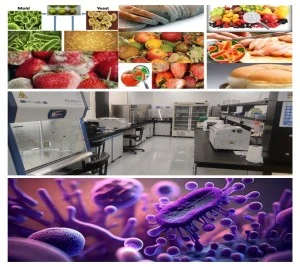
Microbial contamination in food and water can pose serious health risks, causing foodborne and waterborne illnesses. Detecting and preventing contamination is crucial to ensure public safety. Contaminants can include bacteria, viruses, fungi, and parasites, such as Salmonella, Listeria, E. coli, Legionella, norovirus, rotavirus, Aspergillus, and Giardia. Knowing the type of contaminant is essential for selecting the right testing method.
Traditional culture techniques involve growing microorganisms in controlled lab settings using plate counts, enrichment broths, and selective agar. While reliable, these methods can take several days to produce results.
Rapid detection methods, like PCR (Polymerase Chain Reaction), qPCR, and DNA sequencing, offer results in just 1–6 hours by identifying specific genetic material, reducing the risk of false positives or negatives.
Immunological techniques, such as ELISA (Enzyme-Linked Immunosorbent Assay), detect antibodies or antigens and are both fast and sensitive, though they require specialized equipment. Biochemical tests, including API and Biolog systems, identify microorganisms based on their metabolic characteristics, which is useful for unknown species. Automated systems like VITEK can perform bacterial identification, antibiotic susceptibility testing, and epidemiological reporting efficiently.
Food testing requires careful sampling and preparation, considering the food type and regulatory standards. Guidelines from organizations like WHO, FDA, USDA, ISO, and GSO provide frameworks to ensure testing accuracy.
Water testing involves examining samples for parameters such as pH, temperature, turbidity, and microbial indicators. Microscopy, biochemical assays, and molecular techniques help identify microorganisms, while advanced tools like RNA sequencing, DNA fingerprinting, and Next-Generation Sequencing (NGS) allow detailed analysis of waterborne pathogens.
Emerging technologies like nanotechnology and Artificial Intelligence (AI) enhance the detection, prediction, and prevention of microbial contamination. Despite these advances, challenges remain, such as sampling limitations, interference from complex food or water matrices, and regulatory hurdles. Standardizing procedures is critical to ensure consistent and reliable results.
By applying both traditional and modern testing methods, microbial contamination in food and water can be effectively monitored and controlled, protecting public health and ensuring safe consumption. Reference
Fujairah Research Centre