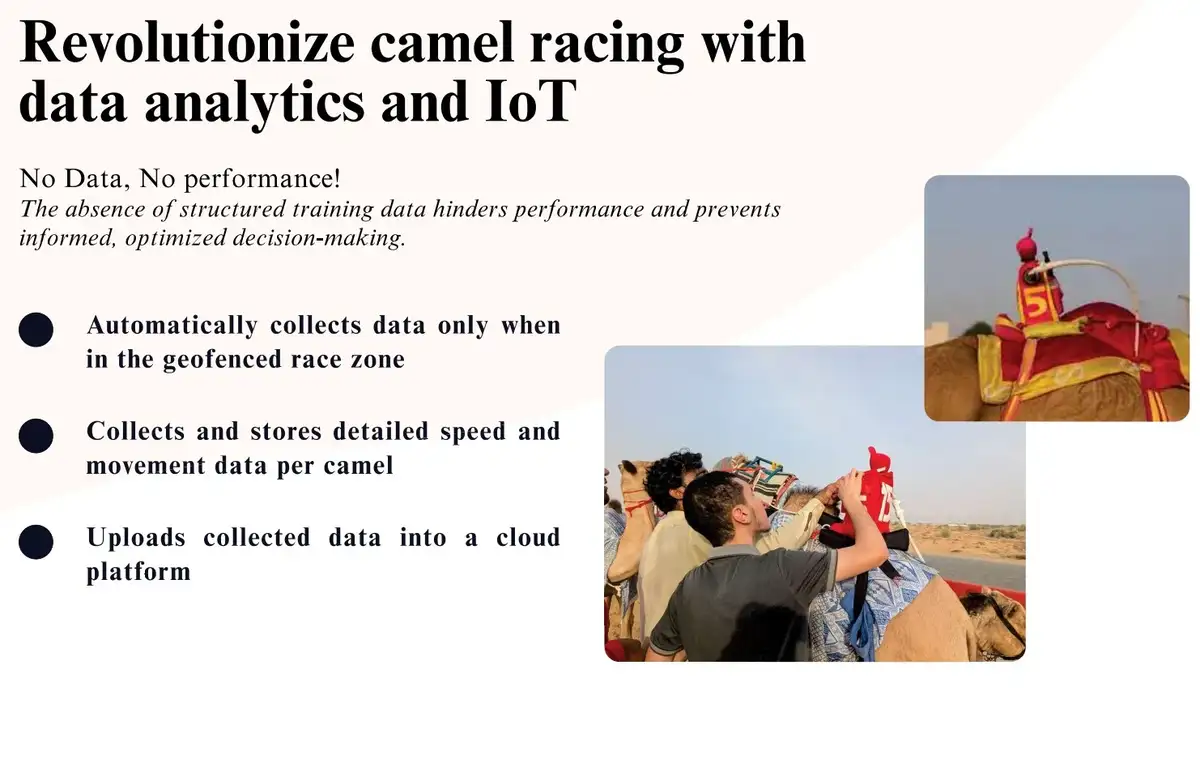
Gait analysis is one of the most complex aspects of camel racing. Even expert trainers with decades of experience often struggle to identify micro-lameness or biomechanical imbalances early. A camel may appear fast and healthy while compensating for a developing issue — shifting weight to the opposite limb, adjusting stride length, or tightening certain muscle groups. These compensations are too small to see consistently, especially when camels move at high speed.
Traditional observation misses:
Left/right force imbalance
Early asymmetry in stride pattern
Minor coordination loss between front and back limbs
Subtle reduction in stride amplitude
Cumulative stress indicators in joint loading
AI-powered gait analysis, on the other hand, interprets thousands of data points per second. It recognizes deviations invisible to the human eye and tracks them over time. It can distinguish between temporary inconsistencies and patterns that signal an upcoming problem. This allows trainers to intervene with corrective exercises, reduced workload, or veterinary checks well before the issue becomes serious.
This is not just injury prevention — it’s performance optimization.A camel with a perfectly balanced gait is faster, safer, and more efficient. AI ensures every step is monitored with precision, bringing technology on par with modern human athletics.