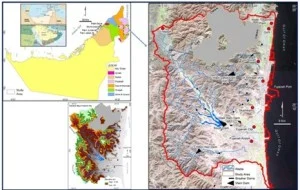
Soil erosion is a major environmental concern, especially in arid regions like Fujairah City, where rocky landscapes and low rainfall make land particularly vulnerable. Extreme rainfall events and flash floods have accelerated erosion, leading to sediment buildup in dams and damage to urban infrastructure.
A recent study used Geographic Information Systems (GIS) and the Revised Universal Soil Loss Equation (RUSLE) model to map erosion-prone areas and assess soil loss. Factors considered included rainfall intensity, soil type, slope, vegetation cover, and land management practices.
The findings showed that most of Fujairah has a low erosion risk, particularly vegetated and low-lying areas. However, around 15% of the region—mainly Wadi Ham, Hayl, and Safad—faces moderate to high erosion risks, with annual soil loss ranging from 25 to 50 tons per hectare. Areas with steep slopes, minimal vegetation, and poorly managed urban lands are the most vulnerable.
Soil and water analyses of local dams revealed elevated levels of heavy metals, highlighting the need for sediment management to maintain water quality. To address these challenges, the study recommends:
Regular dredging and sediment removal in dams.
Urban planning that incorporates erosion control measures.
Vegetation enhancement in high-risk areas to stabilize soil.
By combining advanced technology with sustainable land management, Fujairah can reduce soil erosion, protect infrastructure, and preserve natural landscapes. This approach serves as a model for other arid regions facing similar challenges, balancing urban development with environmental sustainability. Reference
Fujairah Research Centre