Climate change is no longer a distant scenario. It is already reshaping weather patterns across the UAE — from unprecedented rainfall events to rising temperatures, shifting wind patterns, and new coastal risks. As these conditions intensify, the ability to understand, monitor, and anticipate weather becomes a national necessity, not a luxury.
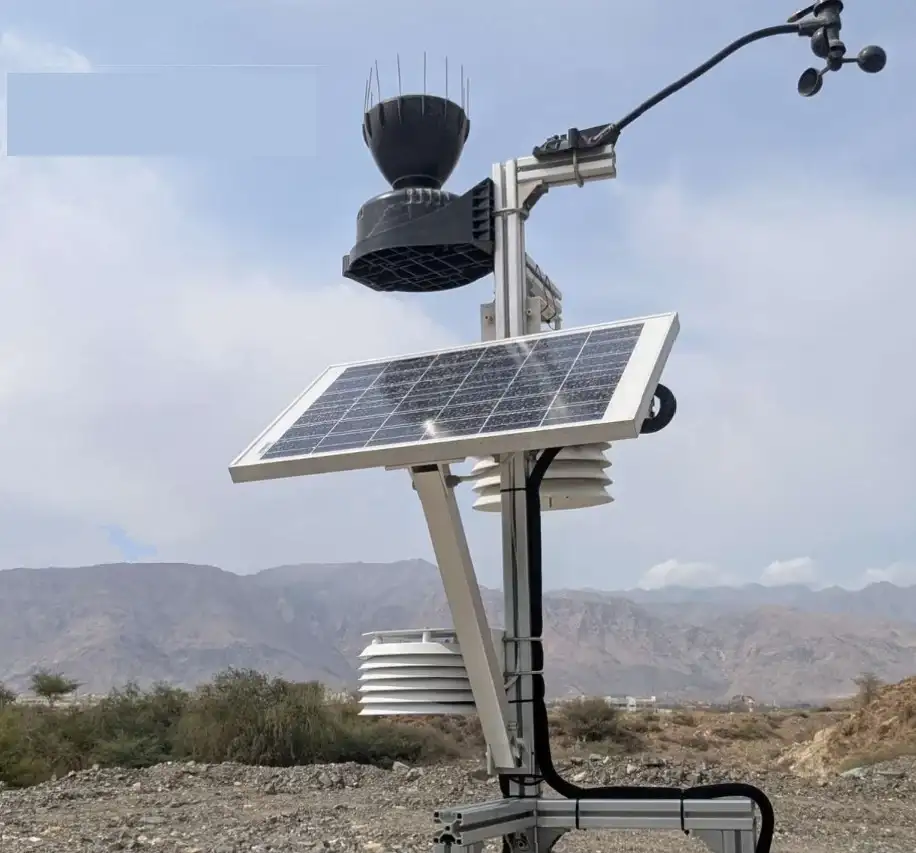
At the Fujairah Research Centre, we decided to confront this challenge directly by developing our own locally manufactured, solar-powered weather station — engineered from the ground up by our team. This is more than a technological milestone. It represents a shift in how the UAE builds resilience: by relying on local expertise, local innovation, and systems tailored to our unique environment.
🌍 Climate Change Requires Precision — and Precision Requires Local Knowledge
Imported weather stations often fail to capture the specific environmental characteristics of the UAE:
Extreme humidity fluctuations
Salt exposure in coastal regions
Rapid temperature changes
Unique desert dust and sand conditions
Highly localized microclimates between mountains, coast, and desert
These are not minor variables; they are core elements that shape accurate predictions.
A station designed in Europe or North America is simply not optimized for the heat, dust, salinity, and operational realities of the Gulf. That gap becomes a risk when forecasting floods, planning infrastructure, or issuing public alerts.
Local knowledge closes that gap.
⚙️ Designed for the UAE — Built to Withstand Our Reality
Our weather station integrates:
High-precision temperature, humidity, wind, and pressure sensors
Dust-resistant engineering
Solar autonomy for remote locations
IoT transmission for real-time visibility
AI algorithms for event detection and pattern learning
Most importantly, it is built with an understanding of UAE terrain — from Fujairah’s mountains to the Gulf of Oman’s coastal winds, to the desert’s heat signatures.
This is why local manufacturing matters: the technology evolves from the environment, not the other way around.
Why Weather Monitoring Is Now a Pillar of Risk Reduction
Climate resilience begins with information.
Early detection of severe rainfall, storm surges, flash floods, or heat stress can:
Protect communities and first responders
Guide infrastructure planning
Support marine operations
Reduce losses for farms, industries, and logistics
Strengthen national early-warning systems
Each accurate reading is a line of defense.
And when the system is built locally, we gain full control over upgrades, maintenance, calibration, and data sovereignty — all essential for long-term climate adaptation.
From Data to Decisions: A Smarter, Safer Future
Our weather station is part of a larger vision: a UAE-driven ecosystem of climate intelligence supported by smart sensors, satellites, marine buoys, AI forecasting models, and early-warning platforms.
Building this foundation locally ensures that innovation stays in the country, grows with the country, and serves the country.
Climate change is accelerating.Resilience must accelerate with it.And that starts with homegrown technology, designed by people who understand the land, the climate, and the risks.