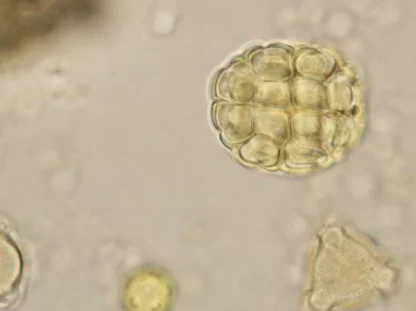
Honey is often described by its color, taste, or region, but none of these elements alone define what honey truly is. The most reliable identity of honey lies in its botanical origin—the plant species that bees visited to produce it.
Each flowering plant leaves behind microscopic botanical markers that act as a biological signature. These markers tell a story that cannot be rewritten by marketing claims or packaging design. When properly analyzed, botanical origin reveals whether a honey is mono-floral or multi-floral, local or blended, authentic or questionable.
For decades, botanical determination relied on manual expert interpretation. While scientifically valid, this approach is slow, subjective, and difficult to scale. As the honey market globalized, the gap between production volume and verification capacity widened.
Modern analytical approaches now allow botanical origin to become a practical identity card, not just a laboratory exercise. When botanical analysis becomes faster and more reproducible, it shifts from being a niche scientific tool to a cornerstone of trust in the honey value chain.
Botanical origin is no longer optional. It is the foundation of credibility.